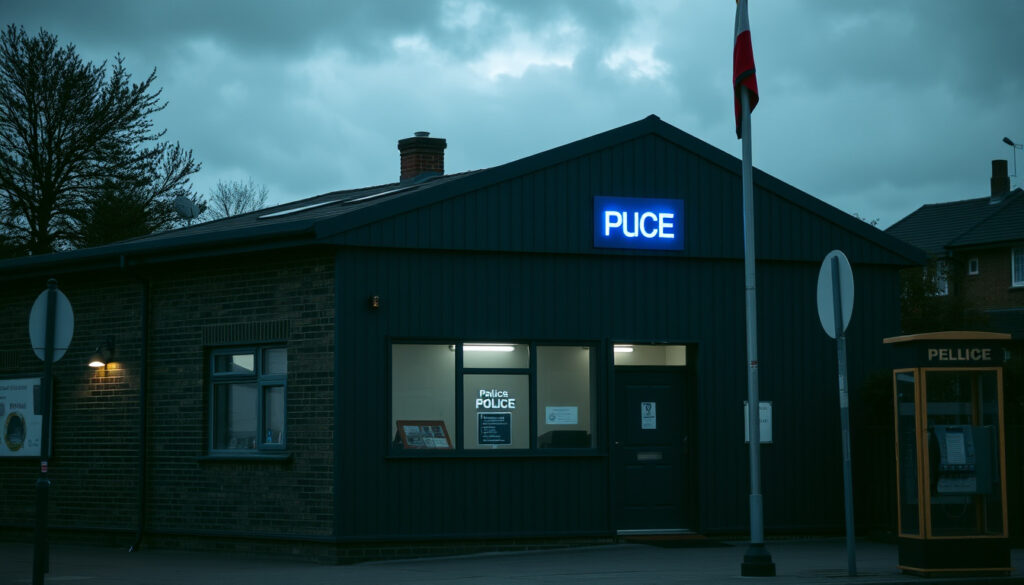
Police Station Near Me: How to Contact, Find, & Know Your Rights
Few things cause more confusion than knowing the right number to call when you need help — especially in Ireland, where the police are called Gardaí and there are two emergency numbers that work just fine. The Garda station directory lists hundreds of stations across the country, but finding the right one and knowing the difference between a 999 call and a local station visit can be trickier than it sounds, so this guide walks you through the practical steps, your rights, and when to use which number.
Emergency number in Ireland and UK: 999 or 112 · Non-emergency Garda contact: Local station number (see garda.ie) · Garda station directory online: Searchable at garda.ie/en/contact-us/station-directory/
Quick snapshot
- Emergency: 999 or 112 (An Garda Síochána – national police service)
- Non-emergency: local station number (Garda Station Directory) (An Garda Síochána – national police service)
- Online station finder (Garda Station Directory) (An Garda Síochána – national police service)
- Call 112 for life threats or crimes in progress (An Garda Síochána) (Crime Victims Helpline – victim support charity)
- Use non-emergency for noise, lost property, etc. (Crime Victims Helpline – victim support charity)
- Online reporting for minor incidents (An Garda Síochána – traffic incident form) (Crime Victims Helpline – victim support charity)
- Warrant generally needed for home entry (European e-Justice Portal – EU judicial platform)
- Limited circumstances to refuse name (SpunOut – youth information charity)
- Right to legal advice if arrested (INAR – immigrant rights network)
- Use Garda station directory (Garda Station Directory) (Swords Dublin – local community site)
- Search by division or name (Garda Station Directory) (Swords Dublin – local community site)
- Check opening hours on station page (Swords Dublin – local community site)
Four key facts sum up the basics of contacting the police on the island of Ireland:
| Fact | Detail |
|---|---|
| Emergency number | 999 or 112 (An Garda Síochána) |
| Non-emergency (Garda) | Visit www.garda.ie for local numbers |
| Non-emergency (PSNI) | 101 (Crime Victims Helpline) |
| Number of Garda stations | Over 560 (Garda Station Directory) |
How do you contact a local police station?
Calling the emergency number
For emergencies that require immediate police attendance, dial 999 or 112. Both numbers connect to the same Garda emergency dispatch centre. An Garda Síochána, Ireland’s national police service, explicitly lists these numbers on its homepage and urges callers to use them for crimes in progress or life-threatening situations.
Using the station directory online
If you need to reach a specific station for a non-urgent matter, the Garda website offers a searchable station directory. You can look up stations by Garda division and find contact numbers, addresses, and in some cases opening hours. The Garda Station Directory is the official source for these details. Crime Victims Helpline, a national victim support charity, also notes that station contact details nationwide are available on the Garda website.
Visiting in person
You can walk into a Garda station during opening hours. Many urban stations are staffed 24 hours a day – for instance, Swords Garda Station is listed as operational 24/7. However, rural stations may have limited hours, so it’s wise to check before visiting. Crime Victims Helpline advises that you can also ring your local station to make an appointment.
- Assess urgency: Determine if it’s a life-threatening emergency or a crime in progress.
- Call emergency dispatch: If urgent, dial 999 or 112 to reach the Garda emergency dispatch centre.
- Find local station details: If non-urgent, use the Garda Station Directory to find the correct contact number and opening hours.
- Contact local station: Call the non-emergency number or walk in during opening hours to report the issue.
Knowing the difference between emergency and non-emergency contact methods saves time and ensures you get the right response. Dialling 999 for a lost bicycle ties up dispatchers who could be handling an active assault. The Garda website’s directory is your single authoritative source for local numbers – don’t rely on search engine snippets alone.
The implication: using the right channel isn’t just about efficiency—it ensures that emergency resources are available for genuine crises.
How do I call the police in Ireland?
Emergency calls: 999 or 112
Both 999 (the UK and Ireland legacy number) and 112 (the pan-European number) connect to the same emergency service. An Garda Síochána’s homepage prominently displays both numbers and confirms they work for any emergency – police, fire, or ambulance. There is no difference in response time or routing.
Non-emergency calls: local Garda station number
For non-urgent matters such as reporting a noise complaint, lost property, or a minor theft that isn’t in progress, you should call your local Garda station directly. Numbers vary by station and are listed on the Garda Station Directory. For example, Finglas Garda Station can be reached at (01) 666 7500 according to Yelp – but the Garda website remains the most reliable source.
Textphone for hearing impaired
The Gardaí provide alternative contact methods for people with hearing difficulties. The Garda Confidential Line (1800 666 111) is available for reporting crime information anonymously (An Garda Síochána). For emergency textphone services, dial 1800 666 111 (or use the 999/112 emergency text registration service). Specific details for textphone access are available on the Garda website.
The pattern: the same principle applies across the island—reserve 999/112 for immediate danger, and direct non-urgent queries to local stations.
When should I call 112?
Life-threatening emergencies
Call 112 or 999 when there is an immediate threat to life or safety: a serious assault, a knifepoint robbery, a person with intent to harm, or a fire. An Garda Síochána states these numbers are for emergencies happening now. Limerick City and County Council similarly advises that if an immediate response is required, callers should use 999/112 or their local Garda station for urgent but non-life-threatening matters.
Crimes in progress
If you witness a crime unfolding – a burglary, a car theft, a fight – call 112. The dispatcher will ask for your location and description of the incident. Delay could mean the suspect escapes. Gardaí emphasise that quick reporting increases the chance of apprehending offenders.
Situations for 101 or local station
In Northern Ireland, the PSNI operates a non-emergency number: 101. For the Republic, there is no single non-emergency number covering all of Ireland. Instead, you must contact the specific Garda station for your area. Crime Victims Helpline advises that you can call or walk into a station to report non-urgent crimes. If you are unsure which station covers your location, use the Garda station directory.
When to use online reporting
The Garda website includes an online reporting form for certain types of incidents, predominantly traffic-related complaints (An Garda Síochána). This is suitable for minor incidents where no immediate response is needed, such as reporting a non-injury collision or providing dashcam footage. Online reporting is not for emergencies.
Misusing the emergency number can carry penalties. Calling 112 for a lost dog or a parking dispute wastes resources and can delay response for someone having a heart attack. The Gardaí treat abuse of emergency services seriously – repeated misuse may lead to a fine or prosecution. Stick to the non-emergency channels for non-urgent matters.
Can a Garda enter your house without a warrant?
Conditions for warrantless entry
Under Irish law, Gardaí generally need a warrant to enter a private home. However, there are exceptions. The European e-Justice Portal, the EU’s official judicial information platform, notes that Gardaí may enter without a warrant in situations such as hot pursuit of a suspect, to prevent imminent harm to someone inside, or to execute a warrant for arrest in connection with a serious offence. The exact parameters depend on the specific legislation, such as the Criminal Justice Act.
Consent and voluntary entry
If a Garda asks to enter your home and you agree, that is considered voluntary entry. You are not legally obliged to let them in unless one of the exceptions applies. SpunOut, a youth information charity, advises that you can politely decline entry if there is no warrant, but doing so may raise suspicion. It is not an offence to refuse entry without a warrant, but it could lead to further questioning or an application for a warrant.
Your rights during a search
If Gardaí do enter your home lawfully – with a warrant or under an exception – the European e-Justice Portal explains that you have the right to be informed of the reason for the search and to remain silent. The Member in Charge of the Garda station is responsible for protecting your rights while you are in the station. INAR’s policing guide adds that a notice of rights should be given on arrival at the station if you are arrested.
Do I legally have to answer the door?
The short answer is no – there is no general legal obligation to open your door to Gardaí unless they are entering lawfully. SpunOut clarifies that you are not required to answer the door, but ignoring persistent knocking may cause Gardaí to suspect something is wrong. In practice, it is often better to communicate through the door or a window so you can confirm their identity and ask whether they have a warrant. The consequences of refusing are context-dependent and not automatically an offence.
What this means: your home is your castle, but the exceptions to the warrant requirement are significant enough to warrant caution. If you’re looking for a place to play, you can find a police station near you with this helpful Putt putt near me Ireland.
Can you refuse to give your name to a Garda?
When you must provide identification
There are specific situations where you are legally required to give your name and address to a Garda. These include traffic stops (Road Traffic Act), if you are suspected of committing a crime, or if you are present at a public place where Gardaí reasonably believe an offence has been committed. SpunOut notes that refusal in these circumstances can be an offence. Providing a false name is also illegal.
Rights to remain silent
Outside of those specific obligations, you have the right to remain silent. You do not have to answer questions about where you have been, what you were doing, or your opinion on a matter. The European e-Justice Portal states that you have the right to consult a solicitor before questioning begins if you are detained. INAR’s policing guide emphasises that a notice of rights should be provided upon arrival at the station.
Consequences of refusal
If you refuse to provide your name in a situation where it is legally required, you can be arrested and charged with obstruction. The exact consequences depend on the context. The research on this point is somewhat unclear: while some sources suggest refusal is always an offence under certain statutes, others indicate that the Gardaí must first establish a reasonable basis. For most people, the safest approach when stopped is to provide your name and address and then, if needed, request a solicitor before answering further questions.
The consequence of refusing without legal grounds can be arrest, making it a decision that should not be taken lightly.
What we know and what remains unclear
Confirmed facts
- 999 and 112 work for police in Ireland (An Garda Síochána)
- Gardaí can enter without warrant in emergencies (European e-Justice Portal)
- PSNI non-emergency number is 101 (Crime Victims Helpline)
- Garda Confidential Line: 1800 666 111 (An Garda Síochána)
What’s unclear
- Exact consequences of refusing to give name to Garda depend on context – case law and specific circumstances matter (SpunOut)
- Whether answering the door is ever legally mandatory in Ireland – no clear statute definitively addresses it (European e-Justice Portal)
- Variability in station opening hours across rural vs urban areas – not all stations are 24/7 (Swords Dublin)
- The exact legal parameters of warrantless entry depend on specific legislation and case law (European e-Justice Portal)
In an emergency always call 999/112.
– An Garda Síochána, national police service
Contact us for non-emergency on 101.
– PSNI (via Crime Victims Helpline referral)
A notice of rights should be given on arrival at the Garda station.
For an Irish resident, the choice is clear: memorise 112 for emergencies, save your local station’s number for everything else, and know your rights – because the line between cooperation and compulsion is thinner than most people think. The Gardaí are there to protect you, but understanding when you can say no without legal risk is your best tool for navigating the system confidently.
sexualoffencesolicitors.ie, yelp.com, cyrilandcosolicitors.com, facebook.com
Frequently asked questions
What is the difference between 999 and 112?
There is no functional difference. Both numbers connect to the same emergency services dispatch in Ireland. 999 is the traditional UK and Ireland number, while 112 is the pan-European standard. Either works.
Can I report a crime online in Ireland?
Yes, the Garda website offers an online reporting form for certain incidents, particularly traffic-related complaints. For other crimes, you must contact your local station by phone or in person. Online reporting is not for emergencies.
What should I do if I am arrested by Gardaí?
Remain calm, do not resist, and ask to speak with a solicitor. You have the right to legal advice before questioning. The Member in Charge of the station is responsible for your welfare and must provide a notice of your rights.
How do I find a Garda station’s opening hours?
Use the Garda station directory on garda.ie to find your station’s page. Hours are listed there, but not all stations display them. You can also call the station directly during normal business hours.
Can I contact Gardaí by email?
Most stations do not publish email addresses for general correspondence. The Garda website provides a contact form for specific queries. For urgent matters, always call.
Do I need an appointment to visit a Garda station?
No, you can walk into most stations. However, some rural stations may operate limited hours. Calling ahead to make an appointment can save you a wasted trip.
Is there a single non-emergency number for the whole Republic of Ireland?
No. Unlike the PSNI in Northern Ireland (which uses 101), the Republic of Ireland does not have a unified non-emergency number. You must contact your local station directly.
Related reading: Closest Beach to Me in Ireland · Windshield Replacement Near Me: Costs & Services in Ireland
More related posts
 Does UPS Deliver on Saturdays? Policy & Times
 Does Max Die in Stranger Things? S4 Death & S5 Fate
 Nike SB Dunk Low: Meaning, Popularity, and Rarest Models
 Hand on Shoulder Meme: Origin, Meaning, and All Variations
 W-9 Form 2026: What Changed, How to Download & Fill
 Galaxy A13 to Buy: 2025 Price, Value & Verdict
 Are Pickles Good for You? Nutrition, Benefits, and Risks
 Micro Center Near Me: USA-Only Stores & EU Shipping Alternatives
