Temple Grandin (Film) – True Story of Autism Pioneer
Temple Grandin (2010 HBO Film): The True Story of an Autism Pioneer
The 2010 HBO biographical drama Temple Grandin chronicles the life of Dr. Temple Grandin, a professor of animal science who became one of the most influential advocates for autism awareness and humane livestock handling. Claire Danes portrays Grandin from her childhood in the 1960s through her groundbreaking professional achievements, offering audiences a window into how autistic individuals perceive the world differently and contribute uniquely to science and industry. The film premiered on HBO on February 6, 2010, and quickly became recognized as one of the most authentic portrayals of autism on screen, earning widespread critical acclaim and multiple Emmy Awards.
Temple Grandin, who remains a professor at Colorado State University, has publicly praised the production for its faithful rendering of her experiences. The project drew from her personal memoirs Emergence and Thinking in Pictures, ensuring that the narrative reflected her own perspective rather than external interpretations. Executive producer Emily Gerson Saines brought personal understanding to the production, having navigated the experience of raising a child on the autism spectrum.
Beyond its entertainment value, the film serves as an educational resource for understanding how visual thinking functions in autistic individuals and how early interventions and supportive environments can unlock extraordinary potential. It also highlights the systemic challenges faced by autistic children in the 1960s, when conditions like autism were frequently misunderstood or misdiagnosed.
What is the Temple Grandin Film About?
Temple Grandin traces the journey of a young autistic girl who, despite facing dismissive treatment from medical professionals and social stigma, grows into a pioneering scientist whose innovations transformed the livestock industry. The narrative opens with Temple as a child experiencing severe sensory sensitivities and emotional dysregulation, behaviors that her mother Eustacia fought to address against the advice of doctors who suggested institutionalization.
Plot Summary
The film begins in the 1960s, depicting young Temple experiencing frequent meltdowns as a result of sensory overload. Medical professionals misdiagnose her with schizophrenia, a common error at the time given the limited understanding of autism spectrum conditions. Her mother, Eustacia Cutler, refuses to accept this diagnosis and instead seeks alternative educational approaches to help her daughter develop communication and coping strategies.
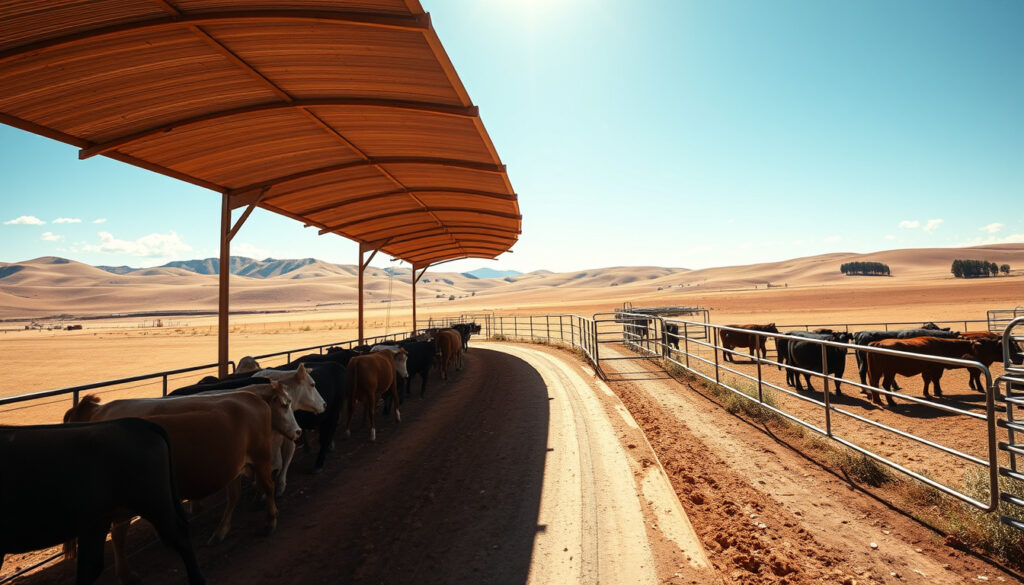
A turning point arrives when Temple spends a summer at her Aunt Ann’s Arizona ranch. There, she observes a cattle squeeze chute—a mechanical device used to hold livestock still during veterinary procedures—and notices that the animals appear calmer when confined within it. Temple discovers that the pressure against her body produces a similar calming effect during moments of anxiety. This observation becomes the foundation for her invention of the “squeeze machine,” a device she builds at Franklin Pierce College to self-regulate sensory overload.
College administrators initially confiscate the machine after colleagues misinterpret its purpose as sexual in nature. Temple responds by conducting informal research demonstrating the device’s therapeutic value for anxiety reduction, establishing a scientific framework for what she already understood intuitively. She subsequently pursues dual degrees in psychology and animal science, facing open sexism from ranch workers who question a woman’s presence in agricultural science.
Her career advances include designing a voluntary cattle dip structure that allows livestock to enter dipping pools willingly rather than being forced, reducing stress and resistance. The initial version faces sabotage, resulting in livestock drownings that Temple must investigate and resolve. She ultimately develops innovative slaughterhouse layouts that prioritize animal psychology, incorporating curved chutes that work with natural flight zones rather than against them.
Key Themes
Central to the narrative is the concept of visual thinking, which Temple describes as “thinking in pictures.” The film illustrates how her brain processes information through images rather than language, a cognitive difference that enabled her to perceive problems in livestock handling from angles that neurotypical engineers had overlooked. Her designs for curved chutes and race systems for cattle emerged directly from this visual processing style.
The film also examines the role of persistence in overcoming institutional barriers. Temple repeatedly confronts skepticism from educators, industry professionals, and peers who question her methods and her right to participate in traditionally male-dominated fields. Each setback reinforces her determination to prove that her approaches produce measurable improvements in animal welfare and operational efficiency.
The film’s depiction of Temple’s mental processes draws directly from her memoir Thinking in Pictures, which describes how she experiences concepts as vivid mental images rather than abstract language. This neurological difference proved advantageous in her engineering work, allowing her to mentally simulate livestock movement through facilities before construction began.
- Release Year: 2010 (HBO)
- Director: Mick Jackson
- Lead Actress: Claire Danes (Emmy Winner)
- Genre: Biography/Drama
- The film secured five Primetime Emmy Awards, including Outstanding Lead Actress for Claire Danes and Outstanding Made for Television Movie.
- Temple Grandin served as a consultant during production, ensuring technical accuracy in the depiction of livestock handling facilities.
- The production was filmed in Texas in 2008 and drew from Grandin’s published memoirs as its narrative foundation.
- Critics frequently describe the film’s portrayal of autism as the most authentic ever committed to screen.
- Julia Ormond and Catherine O’Hara both received Emmy Awards for Supporting Actress for their portrayals of Temple’s mother and aunt respectively.
- The film covers Temple’s life from the 1960s through her emergence as a professional innovator, spanning approximately two decades of real events.
- Grandin’s designs have influenced roughly half of all cattle-handling facilities in the United States.
| Fact | Detail |
|---|---|
| Runtime | 1 hour 48 minutes (approximately 110 minutes) |
| IMDb Rating | 8.2 out of 10 |
| Genre | Biography / Drama |
| Major Awards | 5 Primetime Emmy Awards |
| Premiere Date | February 6, 2010 |
| Content Rating | TV-PG |
| Based On | Memoirs Emergence and Thinking in Pictures |
| Filming Location | Texas, USA (2008) |
Is the Temple Grandin Movie Based on a True Story?
Yes, the Temple Grandin film is based directly on real events from the life of Dr. Temple Grandin, a renowned professor of animal science and prominent advocate for autism awareness. The production drew extensively from her published memoirs, Emergence (1995) and Thinking in Pictures (1995), ensuring that the narrative voice reflected Grandin’s own account of her experiences rather than dramatized interpretations from external writers.
Factual Accuracy
The film maintains substantial accuracy in depicting Grandin’s documented achievements. Her invention of the squeeze machine at Franklin Pierce College, the confiscation of the device by college officials, and her subsequent scientific research validating its calming effects all align with events she has described in interviews and writings. The portrayal of her work with livestock facilities, including her design of curved chutes that work with cattle flight zones and voluntary dip structures, reflects her published engineering contributions.
The film accurately represents the historical context of autism understanding in the 1960s and 1970s, when autistic children were frequently institutionalized or misdiagnosed with conditions like schizophrenia. The depiction of medical professionals advising Temple’s mother to consider residential placement reflects documented attitudes toward autism during that era.
Grandin herself participated in the production as a consultant, reviewing script details and providing guidance on technical aspects of livestock handling. Her involvement ensured that the engineering sequences depicted realistic facility designs rather than fictionalized approximations. The film also received commendation from autism advocacy organizations for its nuanced portrayal of sensory experiences and social challenges.
Dramatizations
While the core events are factual, some sequences employ dramatic compression for narrative purposes. Events spanning months or years are sometimes condensed into single scenes, and certain supporting characters may represent multiple real individuals. The precise chronology of some professional milestones has been adjusted to create more effective dramatic pacing, though the essential sequence of her development as a researcher and innovator remains intact.
Grandin has publicly stated that the film “captures my visual thinking and the way my mind works,” lending direct personal endorsement to the production’s accuracy in depicting her cognitive processes. Her continued status as a professor and public speaker lends additional credibility to the narrative framework.
Who Stars in and Directed the Temple Grandin Movie?
Claire Danes leads the cast in the title role, delivering a performance that critics and autism advocates alike have recognized as exceptionally nuanced and authentic. Director Mick Jackson, known for his work on films including Volcano and The Bodyguard, helmed the production with a focus on grounded, non-sentimental storytelling that let the material’s emotional weight emerge through character development rather than dramatic manipulation.
Cast Highlights
Claire Danes underwent extensive preparation for the role, studying Grandin’s lectures, interviews, and documentaries to accurately capture her vocal patterns, physical movements, and the distinctive way she engages with her surroundings. The performance earned her the Primetime Emmy Award for Outstanding Lead Actress in a Miniseries or Movie, with judges noting her “precise” delivery and the physical authenticity she brought to the role.
Catherine O’Hara portrays Aunt Ann, the owner of the Arizona ranch where young Temple spends the formative summer that introduces her to cattle handling concepts. O’Hara received an Emmy Award for Outstanding Supporting Actress for this performance, bringing warmth and practical wisdom to the character who serves as one of Temple’s earliest sources of unconditional acceptance.
Julia Ormond plays Eustacia Cutler, Temple’s determined mother who battles educational institutions and medical professionals to secure appropriate support for her daughter. Ormond also received an Emmy Award for Outstanding Supporting Actress, with critics highlighting her portrayal of a mother’s fierce advocacy balanced against her own moments of exhaustion and doubt.
Director and Production
Mick Jackson directed the production with a documentary-like restraint, avoiding the melodramatic pitfalls that often plague biographical films. His approach emphasized visual authenticity in the livestock handling sequences, working closely with Grandin to ensure that the facilities depicted on screen functioned according to principles she developed in actual practice.
The production was filmed primarily in Texas during 2008, before its 2010 HBO premiere. Executive producer Emily Gerson Saines drew upon her personal experience raising an autistic child when developing the project, bringing an authenticity of understanding that complemented Grandin’s direct involvement as a consultant. The combination of first-hand lived experience and subject-matter expertise produced a biopic that resonated equally with medical professionals, autism advocates, and general audiences.
“Claire Danes delivers a stellar performance, capturing the essence of Grandin’s unique perspective.”
— The Art of Autism review
Where Can I Watch the Temple Grandin Film?
The Temple Grandin film is available for streaming on Max, the platform formerly known as HBO Now and HBO Go. Since HBO transitioned to the Max branding, the film has been included in the platform’s catalog of prestige dramas and biographical features. Subscribers can access the full 110-minute runtime along with supplementary content discussing the real Grandin’s ongoing work in livestock science.
Streaming Options
Current streaming availability centers on Max, HBO’s owned platform, where the film has maintained consistent presence since its addition to the service. Availability through third-party streaming platforms that carry HBO content may vary by region and licensing agreements. Viewers interested in watching should verify current listings directly through Max or authorized streaming aggregators.
For those who prefer to own the film outright, digital purchase options through platforms like Amazon Prime Video, Apple TV, and Google Play typically offer the film for rental or permanent download. Physical media copies may also be available through standard retail channels, though the HBO release format limits availability compared to standard theatrical releases.
Practical Details
The film carries a TV-PG content rating, indicating suitability for general audiences with parental guidance suggested for younger viewers due to thematic elements related to institutional prejudice and autism-related challenges. The runtime of approximately 110 minutes fits comfortably within a single viewing session.
Streaming catalog placements change periodically as licensing agreements expire and renew. The information available through mid-2024 indicates continued availability on Max, though readers are encouraged to verify current access through their preferred platforms before planning a viewing.
What Awards Did Temple Grandin Win?
The Temple Grandin film received exceptional recognition upon its 2010 release, accumulating five Primetime Emmy Awards across major categories. The film’s awards sweep demonstrated the Television Academy’s recognition of excellence in writing, directing, and performance across both leading and supporting categories simultaneously.
Emmy Wins
Claire Danes claimed the Primetime Emmy Award for Outstanding Lead Actress in a Miniseries or Movie for her portrayal of Grandin, delivering a performance that critics described as precise, physically authentic, and emotionally resonant. The film itself secured the Emmy for Outstanding Made for Television Movie, recognizing the production’s overall excellence in writing, direction, and technical execution.
Mick Jackson received the Emmy for Outstanding Directing for a Miniseries, Movie, or Dramatic Special, with judges highlighting his restrained visual approach that allowed Grandin’s story to unfold without manipulative sentimentality. Both Julia Ormond and Catherine O’Hara received Emmys for Outstanding Supporting Actress in a Miniseries or Movie, marking a rare dual Supporting Actress recognition within a single production.
Critical Acclaim
Beyond the Emmy Awards, the film accumulated additional honors including recognition from the Directors Guild of America and nominations for Golden Globe Awards. Rotten Tomatoes aggregate reviews reflect consistent critical enthusiasm, with reviewers frequently noting the film as a benchmark for authentic autism representation in mainstream media.
The film’s legacy extends into educational contexts, where educators and autism specialists have adopted it as a teaching resource for illustrating how autistic individuals experience the world and contribute meaningfully to scientific fields. Its continued availability on streaming platforms sustains this educational impact years after its initial broadcast premiere.
Did Temple Grandin Actually Change the Livestock Industry?
Temple Grandin’s real-world impact on livestock handling extends substantially beyond the events depicted in the film. Her designs for cattle facilities have become industry standards, with estimates suggesting that her principles influence the layout and operation of approximately half of all cattle-handling systems in the United States. Her work prioritized animal psychology, recognizing that livestock respond to environmental pressures in predictable ways that can be either exploited or minimized depending on facility design.
Her innovations include curved chute systems that work with animals’ natural flight zones, preventing the panic response that occurs when livestock perceive threats directly ahead. She developed and promoted the concept of voluntary handling, where animals move through facilities willingly rather than being forced, reducing stress for animals and handlers alike while improving operational efficiency and meat quality.
Grandin’s advocacy for humane slaughter practices positioned her uniquely within an industry often criticized by animal welfare groups. Rather than opposing slaughter operations, she argued for designing them in ways that minimize animal distress prior to processing, establishing a middle ground between industry interests and welfare concerns that has informed subsequent standards development.
A Timeline of Key Events
The Temple Grandin film condenses roughly two decades of real events into its 110-minute runtime, focusing on the period from Temple’s early childhood through her emergence as a recognized professional innovator. Below is a chronological overview of the major events depicted and their real-world timing.
- Early 1960s — Temple Grandin’s autistic childhood, marked by sensory sensitivities, meltdowns, and misdiagnosis. Her mother fights against institutionalization recommendations.
- Summer at Aunt Ann’s Arizona ranch — Temple discovers the calming effect of the cattle squeeze chute and begins conceptualizing her own pressure device.
- College years at Franklin Pierce College — Temple constructs and uses the squeeze machine for self-regulation. The device is confiscated by college officials who misinterpret its purpose.
- Graduate studies — Temple pursues dual degrees in psychology and animal science, navigating professional sexism while developing her facility design principles.
- Professional breakthroughs — Temple designs and implements revolutionary livestock handling facilities, including curved chutes and voluntary cattle dip structures.
- 2008 — Principal photography for the film takes place in Texas.
- February 6, 2010 — The film premieres on HBO.
- August 2010 — The film earns five Primetime Emmy Awards during the Television Academy ceremony.
What’s Confirmed and What Remains Unclear
The Temple Grandin film operates within a well-documented factual framework, with the subject herself serving as an active consultant and public endorser of the production’s accuracy. However, certain aspects of the narrative invite closer examination regarding what scholars have definitively established versus what remains subject to interpretation or incomplete documentation.
| Established Information | Uncertain or Unverified Details |
|---|---|
| The film draws from Grandin’s memoirs Emergence and Thinking in Pictures | Precise chronology of some professional milestones, condensed for dramatic pacing |
| Grandin invented and used a squeeze machine for anxiety management | Exact number of individuals represented by certain supporting characters |
| Her facility designs follow principles documented in peer-reviewed livestock science literature | Specific details regarding the initial sabotage of her cattle dip design |
| Grandin served as a consultant during production and approved the final script | Undisclosed correspondence or interactions during development that did not appear in final cut |
| The film covers events primarily from 1960s through the late 1970s | Details regarding her later career expansions not depicted in the film |
| Her autism was initially misdiagnosed during the era depicted | Complete documentation of her academic mentors’ specific contributions |
Understanding the Broader Impact
The release of the Temple Grandin film coincided with a period of increasing public interest in autism spectrum conditions, though awareness differed substantially from current understanding. The film arrived at a moment when diagnostic rates were rising but public comprehension of how autistic individuals experience daily life remained limited. Its accessible dramatic format made complex neurological concepts tangible for audiences who might never read a clinical paper on sensory processing differences.
For the autism advocacy community, the film represented a rare example of autistic representation in mainstream media that aligned with lived experience rather than external stereotypes. Grandin’s direct involvement ensured that the portrayal reflected genuine cognitive differences rather than exaggerated dramatizations designed for non-autistic audience comfort. Organizations including Autism Speaks highlighted the film as a resource for promoting understanding between autistic and neurotypical individuals.
The livestock industry’s response to the film proved largely positive, with Grandin’s public profile lending credibility to welfare-focused practices that had previously faced resistance from cost-conscious operators. Her demonstrated success with facility designs that improved both animal welfare and operational efficiency provided a business case for adoption that supplemented moral arguments.
Key Voices and Sources
The Temple Grandin film rests on a foundation of established sources, beginning with Grandin’s own published memoirs and extending to coverage from established entertainment and advocacy publications. The following represents the primary sources informing understanding of the production.
“The film captures my visual thinking and the way my mind works.”
— Dr. Temple Grandin, regarding the HBO production
“A brilliant biographical masterpiece that tells the story with authenticity and emotional depth.”
— The Art of Autism review
Reviews from established autism advocacy publications, entertainment industry databases, and educational platforms consistently affirm the film’s accuracy in depicting Grandin’s experiences and achievements. The involvement of Grandin herself as a production consultant provides direct attribution linking the on-screen narrative to her documented personal history.
Summary
The Temple Grandin film stands as a landmark achievement in biographical storytelling, combining Claire Danes’ acclaimed performance with rigorous factual accuracy verified by Grandin herself. The production successfully translates complex neurological concepts into accessible dramatic narrative while celebrating the contributions that autistic individuals can make when provided appropriate support and opportunities. With five Emmy Awards and sustained critical acclaim, the film continues serving as both entertainment and educational resource years after its premiere.
For viewers interested in exploring similar biographical content, Stranger Things Season 2 offers another example of television drama exploring complex character dynamics with strong ensemble performances. Who Wants to Be a Millionaire provides an additional reference point for understanding how entertainment formats have evolved alongside shifts in public awareness around previously misunderstood conditions.
Frequently Asked Questions
Is the Temple Grandin movie available on Netflix?
As of mid-2024, the Temple Grandin film has not been available on Netflix. The HBO affiliation of the production means Max (formerly HBO Max) remains the primary streaming platform where the film can be found.
How long is the Temple Grandin film runtime?
The film runs approximately 110 minutes, which translates to roughly one hour and forty-eight minutes of runtime.
Does Temple Grandin approve of the movie?
Yes, Dr. Temple Grandin served as a consultant during production and has publicly stated that the film accurately captures her visual thinking and the way her mind works.
What awards did Claire Danes win for Temple Grandin?
Claire Danes won the Primetime Emmy Award for Outstanding Lead Actress in a Miniseries or Movie for her performance as Temple Grandin.
Can I watch the Temple Grandin trailer online?
Trailers for the film are available through official HBO archives and YouTube, featuring Grandin’s narration about visual thinking and clips from the ranch sequences.
What books did Temple Grandin write that the film is based on?
The film draws from Grandin’s memoirs Emergence (1995) and Thinking in Pictures (1995), both of which document her childhood experiences, educational journey, and professional development.
How accurate is the portrayal of livestock handling in the film?
Industry professionals and Grandin herself have confirmed the accuracy of livestock handling sequences, with Grandin reviewing facility designs depicted on screen to ensure they followed principles she developed in actual practice.
More related posts
 Pirates of the Caribbean Order: How to Watch All Movies
 Sarah Jessica Parker Movies and TV Shows: Full List
 Katy Perry’s American Idol: Tenure, Kiss Scandal, Exit
 Nike SB Dunk Low: Meaning, Popularity, and Rarest Models
 Warriors vs Knicks: Player Stats & Game Analysis
 Starbucks Red Cup Day 2025: Date, Rules, Free Cup Steps
 Journey Together Card List: Full Set, Prices & Top 10
 Julian McMahon Movies and TV Shows: Complete Filmography
