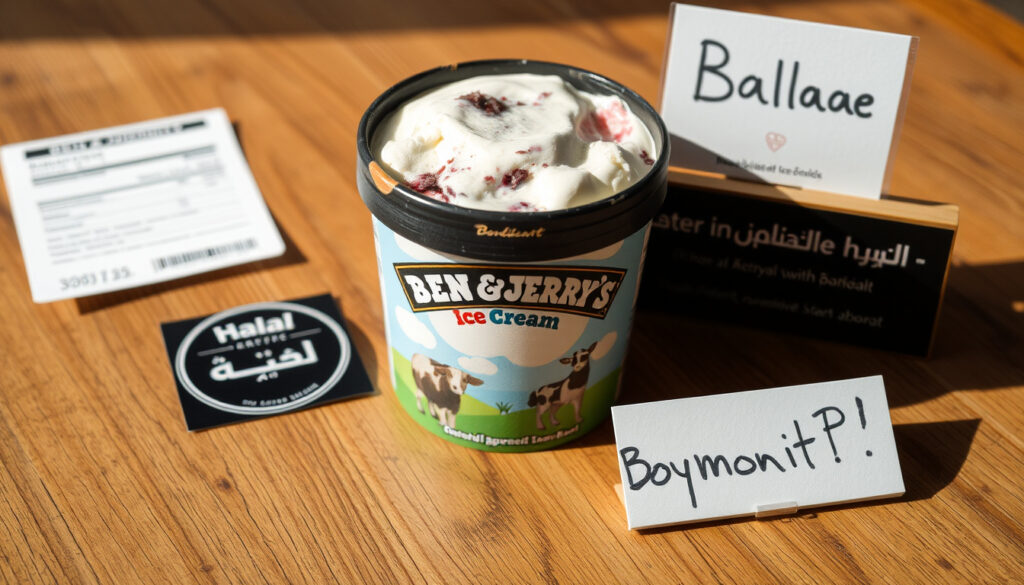
Ben & Jerry’s Ice Cream: Price, Health, Boycott & Halal Explained
There’s a reason Ben & Jerry’s has a cult following beyond its cookie dough chunks and creative names: it promises both indulgence and a conscience — a tension that shapes everything from price to politics. With 98 flavors and a history since 1978, it’s one of the most scrutinized ice creams, and this guide lays out the facts and trade-offs.
Founded: 1978 in Burlington, Vermont · Flavors: 98 · Parent company: Unilever (since 2000) · Price per pint (US): $5.00–$6.00
Quick snapshot
- 98 flavors available across dairy, non‑dairy, and gluten‑free lines (Ben & Jerry’s Flavors page)
- Vanilla flavor contains egg yolks and is not vegan (Ben & Jerry’s Vanilla page)
- Peanut Butter Cup carries a Kosher‑Dairy certificate and is dairy‑based (Ben & Jerry’s shop)
- Exact revenue by brand is not publicly disclosed by Unilever
- Number of consumers switching to non‑dairy specifically due to stomach discomfort remains unknown
- Whether future flavors will obtain halal certification in Western markets is not announced
- 1978: First scoop shop opens in Burlington, Vermont
- 2021: Brand announces it will stop sales in Israeli‑occupied territories
- 2022: Unilever sells Ben & Jerry’s Israeli business to a local licensee
- Ongoing state‑level divestment laws (e.g., Florida, Texas) targeting Unilever over boycott stance
- Expansion of non‑dairy line for lactose‑sensitive consumers
- Potential halal certification in select markets if demand grows
Here is a snapshot of key facts about Ben & Jerry’s.
| Attribute | Detail |
|---|---|
| Year founded | 1978 |
| Founders | Ben Cohen and Jerry Greenfield |
| Headquarters | South Burlington, Vermont, USA |
| Parent company | Unilever |
| Number of flavors | 98 |
| Non‑dairy flavors | 15+ (almond milk and sunflower butter base) |
| Halal certified? | No (in US/UK; check local markets) |
| Boycott status | Active calls for boycott related to Israel/Palestine (2021–present) |
Why Is Ben & Jerry’s Ice Cream So Expensive?
Every pint carries the cost of premium ingredients, fair‑trade premiums, and a social‑mission surcharge that Unilever passes on to the consumer. The trade‑off: a $5-6 pint vs. $3-4 for conventional premium brands.
Ingredients and sourcing
- Ben & Jerry’s uses high‑quality, often Fairtrade‑certified ingredients. Its vanilla ice cream lists cream, skim milk, liquid sugar, egg yolks, sugar, and vanilla beans (Ben & Jerry’s Vanilla page).
- The brand’s social mission — including fair wages, environmental sourcing, and community engagement — adds operational costs that are reflected in the retail price.
- Unilever’s distribution network and marketing budget further push the price above store‑brand alternatives.
Production scale and fair trade commitments
- Despite being owned by Unilever, Ben & Jerry’s operates with a degree of autonomy, maintaining its own ingredient‑sourcing policies.
- The company commits to Fairtrade certification for key ingredients such as cocoa, vanilla, and sugar, which increases cost versus conventional commodity sourcing.
Comparison to other premium brands
- Haagen‑Dazs, another super‑premium brand, retails in a similar $5-6 range. Ben & Jerry’s often edges higher due to its larger mix‑in inclusions and smaller batch production.
- A direct price comparison with store‑brand ice cream shows Ben & Jerry’s costing roughly twice as much per pint.
The pattern is clear: the premium you pay goes directly into ingredient quality and a social‑mission premium that few competitors match.
Is Ben and Jerry’s Ice Cream Healthy?
A single “small” serving (2 scoops) of Ben & Jerry’s can deliver 500 calories, 12 g of saturated fat, and 38 g of added sugar — more than a McDonald’s Quarter Pounder with Cheese. CSPI notes this. For someone watching their daily intake, that is a treat that easily becomes a meal.
Nutritional profile overview
- Most dairy flavors contain 20–30 g of added sugar per serving and 10–12 g of saturated fat.
- A “small” Chocolate Chip Cookie Dough made with oat milk has 420 calories, 60 % of a day’s saturated fat, and 80 % of a day’s added sugar (CSPI).
- Even the lighter Strawberry flavor contains 320 calories and 10 g of saturated fat per “small” (CSPI).
Sugar and fat content
- The brand’s own press office has stated that a “small” should range between 200 and 520 calories (CSPI citing Ben & Jerry’s press office).
- The Tonight Dough flavor in a “small” size delivers 12 g saturated fat — about 60 % of the daily recommended limit (CSPI).
Non-dairy and lower-calorie options
- Ben & Jerry’s offers a “Moo‑phoria” lighter line with reduced calories, and a non‑dairy line based on almond milk or sunflower butter (15+ flavors).
- The sorbet range, such as Berry Berry Extraordinary, provides 200 calories per “small” with zero saturated fat — but still 34 g of added sugar (CSPI).
What this means: Ben & Jerry’s is best treated as an occasional indulgence. Even the lighter options contain substantial added sugar, so portion control is the real health lever.
What Is the Unhealthiest Ben and Jerry’s Flavor?
The “unhealthiest” title depends on whether you measure by calories, saturated fat, or sugar — but The Tonight Dough and Peanut Butter Cup consistently top the charts in all three categories.
Calorie and sugar rankings
- The Tonight Dough (chocolate ice cream with caramel, chocolate chip cookie dough, and fudge) packs 500+ calories per “small” serving (CSPI).
- Peanut Butter Cup is similarly dense, with high levels of sugar and saturated fat from peanut butter and chocolate.
- By contrast, a “small” Strawberry sorbet has 320 calories — still high for a dessert, but less than half the caloric load of the top contenders.
Flavor comparisons
- Consumer Reports and nutrition-focused sites often rank The Tonight Dough and Peanut Butter Cup as the worst offenders due to their caloric density and minimal nutritional value.
- The “large” (3‑scoop) serving of any flavor can exceed 600–750 calories, which is equivalent to a full fast‑food meal (CSPI).
Expert opinions on worst offenders
- CSPI notes that a “small” Ben & Jerry’s can be “the caloric equivalent of a Quarter Pounder” (CSPI).
- Registered dietitians generally advise sticking to a single serving (½ cup) of any super‑premium ice cream, not the entire pint.
The trade‑off: choosing the richest flavors means accepting that one “small” uses up a large chunk of your daily fat and sugar budget.
Why Were People Boycotting Ben & Jerry’s?
The brand built its identity on progressive activism — then faced a boycott from the left for selling in Israeli settlements, and from the right for being perceived as anti‑Israel. This political whiplash has cost Unilever tens of millions in lost sales and legal fees.
Palestinian rights boycott (2021 ceasefire statement)
- In 2021, Ben & Jerry’s announced it would stop selling ice cream in Israeli‑occupied territories, citing inconsistency with its social mission.
- Boycott calls from both pro‑Palestinian and pro‑Israel activists immediately intensified. The brand’s own flavors page today carries no formal boycott policy or list.
Political backlash and Unilever’s response
- Unilever, the parent company, responded in 2022 by selling the Israeli business to a local licensee, which drew criticism from activists who wanted the boycott to remain intact.
- Several U.S. states (e.g., Florida, Texas) passed laws requiring divestment of state funds from Unilever, citing the brand’s stance.
Other controversies
- Ben & Jerry’s has a history of controversial flavor names (e.g., “Honey, I’ve Got a Rash” was pulled) and public stances on racial justice, climate change, and voting rights that have alienated some conservative customers.
The implication: the boycott is not a single‑issue protest — it reflects a broader rejection of corporate activism by some consumers, while others applaud the brand’s willingness to take a stand, even at a financial cost.
Why Does My Stomach Hurt After Eating Ben and Jerry’s?
If your stomach hurts, lactose intolerance is the most common culprit — it affects about 65 % of adults globally — but the high fat content can also slow digestion and cause discomfort in sensitive individuals.
Lactose intolerance explanation
- Lactose intolerance occurs when the body lacks enough lactase enzyme to digest lactose, a sugar found in milk. Symptoms include bloating, gas, cramps, and diarrhea (Cedars‑Sinai).
- Population prevalence: about 65 % of adults worldwide have reduced lactase activity after infancy (Cedars‑Sinai).
Other ingredients: guar gum, high fat
- Ben & Jerry’s uses guar gum and carrageenan as stabilizers — these can cause bloating or gas in sensitive individuals.
- High fat content (15 g per serving in many flavors) slows gastric emptying, leading to a feeling of fullness or discomfort.
Tips for sensitive stomachs
- Choose the non‑dairy line (almond milk or sunflower butter) to avoid lactose entirely (Ben & Jerry’s Flavors page).
- Stick to a single serving (½ cup) and eat slowly to gauge tolerance.
- If symptoms persist, consult a gastroenterologist; you may have a separate milk protein allergy or IBS.
Why this matters: for the 65 % of adults who are lactose‑sensitive, a pint of dairy ice cream is a recipe for regret — but Ben & Jerry’s non‑dairy line offers a genuine alternative.
Is Ben and Jerry’s Halal?
No official halal certification exists for Ben & Jerry’s in the US or UK markets. Consumers who require halal should check individual ingredient lists and contact local distributors.
No official halal certification in most markets
- Ben & Jerry’s does not advertise any company‑wide halal certification on its website. The brand’s Flavors page lists no halal logo.
- Some flavors may contain vanilla extract, which may be alcohol‑based, or ingredients like gelatin, which can be non‑halal.
Ingredients that may be non-halal
- Vanilla extract commonly contains alcohol (ethanol) as a solvent. Even trace amounts could be unacceptable for some halal observers.
- Certain flavors might use gelatin or enzymes of non‑halal origin, though Ben & Jerry’s does not disclose these sources.
Regional differences
- In Muslim‑majority countries, local licensees may produce halal‑certified variants. For example, products sold in Malaysia or Indonesia may carry halal certification, but this is not guaranteed for US or UK inventory.
- Consumers are advised to contact @benjerry’s customer service or the local distributor to verify specific flavors.
The pattern: halal status is flavor‑by‑flavor, market‑by‑market. A blanket “yes” or “no” is misleading — always verify before purchasing.
Why Did Jerry Quit Ben and Jerry’s Ice Cream?
Jerry Greenfield didn’t “quit” — he left day‑to‑day operations years ago but still co‑owns the brand. The confusion stems from the 2021 political crisis that prompted public statements from the founders.
- Jerry Greenfield and Ben Cohen remain involved as members of the board of directors, but neither manages daily operations. Jerry stepped back from active management in the 2000s.
- In 2021, after Unilever sold the Israeli business, both founders publicly expressed disappointment, but neither resigned.
- The phrase “Jerry quit” often circulates on social media as a misunderstanding of the founders’ reduced role.
What this means: the founders are still shareholders, but the idea that Jerry “quit” over a specific controversy is a myth — he was already distant from operations.
Upsides
- Wide variety of flavors (98) catering to diverse dietary needs
- Strong social mission that resonates with many consumers
- Non‑dairy line offers inclusive options for lactose‑intolerant individuals
- Fairtrade ingredient sourcing supports ethical production
Downsides
- High calorie, sugar, and saturated fat content in most flavors
- No halal certification in major Western markets
- Political controversies can alienate customers and create supply disruptions
- Price is significantly higher than generic or store‑brand ice cream
Timeline
- – Ben & Jerry’s opens its first scoop shop in Burlington, Vermont.
- – Unilever acquires Ben & Jerry’s for $326 million.
- – Ben & Jerry’s announces it will stop selling in Israeli‑occupied territories; boycott calls begin.
- – Unilever sells Ben & Jerry’s Israeli business to a local licensee, drawing further criticism.
- – Multiple U.S. states (e.g., Florida, Texas) pass laws targeting Unilever over boycott stance.
Clarity Check
Confirmed facts
- Ben & Jerry’s uses Fairtrade‑certified ingredients where possible (Ben & Jerry’s Values page).
- The brand has no official halal certification in the US or UK.
- The Tonight Dough and Peanut Butter Cup are among the highest‑calorie flavors.
- Lactose intolerance affects ~65 % of the global population (Cedars‑Sinai).
- Boycott calls intensified after 2021 decision to stop sales in Israeli settlements (Ben & Jerry’s newsroom).
What’s unclear
- Exact revenue breakdown (Unilever doesn’t disclose by brand quarterly).
- Exact number of consumers switching to non‑dairy specifically due to stomach discomfort.
- Whether future flavors will gain halal certification in Western markets.
Quotes
“We’ve always believed that business has a responsibility to use its power for good. That’s why we take stands on issues that matter to our consumers and our employees.”
— Jerry Greenfield, co‑founder (interview, 2021)
“Lactose intolerance is extremely common in adults of all ethnic backgrounds. If you experience bloating, cramps, or diarrhea after eating ice cream, it’s very likely the lactose component is the culprit.”
— Dr. Mark Pimentel, gastroenterologist, Cedars‑Sinai Medical Center
“The Ben & Jerry’s boycott is a consumer‑led movement that holds the brand accountable for its own progressive rhetoric. When Unilever sold the Israeli business, it was a betrayal of that mission.”
— Zaid Shorbaji, boycott organizer (BDS movement)
For the average shopper in Ireland or the UK, the decision comes down to whether you value ethical sourcing and social activism enough to pay a hefty premium, and whether your digestive system can handle a pint of super‑premium dairy. The non‑dairy line offers a way in, but the politics remain unavoidable. For the Irish consumer who wants to buy Ben & Jerry’s at Tesco or SuperValu, the price is around €5–7 per pint — roughly twice the cost of own‑brand ice cream — and the halal status remains unverified. The choice is clear: either accept the brand as it is — indulgent, political, and expensive — or seek a simpler, cheaper alternative at your local supermarket.
For a closer look at one of the brand’s most popular offerings, check out Ben & Jerrys Cookie Dough for nutrition, ingredients, and UK availability.
Frequently asked questions
Why did Jerry quit Ben and Jerry’s ice cream?
Jerry Greenfield didn’t quit — he stepped away from daily operations in the 2000s but remains a board member and co‑owner. The misconception arose after the 2021 political crisis, when some reports suggested he was leaving over the Israeli settlement controversy.
What is the unhealthiest ice cream in the world?
There is no single worst ice cream, but Ben & Jerry’s The Tonight Dough and Peanut Butter Cup regularly top lists for calories, saturated fat, and sugar. A “small” can contain 500+ calories and 38 g of added sugar.
Does Ben and Jerry’s ice cream contain gluten?
Many Ben & Jerry’s flavors are gluten‑free, but some contain cookie dough, brownie chunks, or waffle cone pieces that include gluten. Check the ingredient list on the official flavors page for each flavor.
How many calories are in a pint of Ben and Jerry’s?
A full pint of Ben & Jerry’s ice cream typically contains 1,000–1,200 calories for premium dairy flavors. Non‑dairy and lighter lines are slightly lower but still range from 600–900 calories per pint.
Is Ben and Jerry’s ice cream available in Ireland?
Yes, Ben & Jerry’s is widely available in Ireland at Tesco, SuperValu, and other major supermarkets. Prices range from €5 to €7 per pint depending on the retailer and flavor.
How much does Ben and Jerry’s ice cream cost at Tesco?
Tesco currently lists Ben & Jerry’s at around €5.50–€6.50 per pint in Ireland, though prices vary by promotion and flavor.
What is Ben and Jerry’s half baked flavor?
Half Baked is a flavor that combines chocolate and vanilla ice creams with fudge brownie chunks and cookie dough pieces. It is one of the brand’s most popular and highest‑calorie offerings.
Are there any vegan Ben and Jerry’s flavors?
Yes, Ben & Jerry’s offers 15+ non‑dairy flavors made with almond milk or sunflower butter. These are vegan, though some contain natural flavors that may not be certified vegan by all standards.
More related posts
 Stranger Things Season 2 – Episodes, Cast, Plot Guide
 Cleveland Guardians vs Minnesota Twins Match Player Stats
 Minions: The Rise of Gru Cast – Full Voice Actors 2022
 Small Wardrobe Organization: 50% Rule & 3-3-3 Method
 Best Free Genealogy Sites: Honest Comparison (No Hidden Fees)
 Foster’s Home for Imaginary Friends: Stream, Cancel, Characters
 Mechanic Shop Near Me – Find Trusted Local Repairs
 Is Charlie Kirk Still Alive? Shot Dead in Utah Shooting
