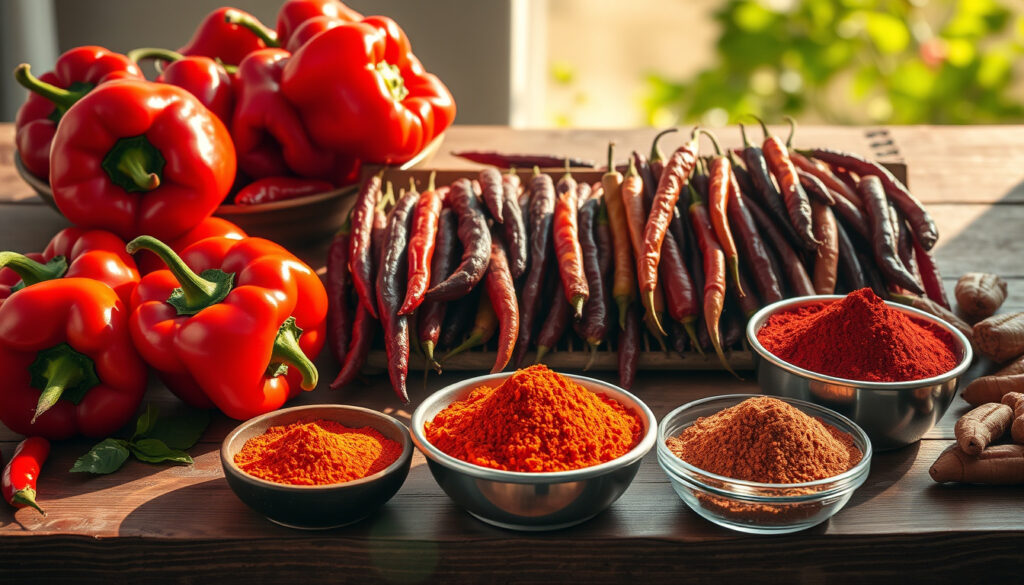
Paprika is a ground spice crafted from the dried pods of specific Capsicum annuum pepper varieties. Native to Central and South America before spreading across the globe, this vibrant red powder ranges from sweet and mild to distinctly hot, with its color derived from natural carotenoid pigments. Despite its widespread presence in kitchens worldwide, many remain uncertain about what exactly goes into this beloved spice and how it differs from other pepper products.
Understanding paprika’s composition reveals why it occupies a unique position among spices. The production process, pepper selection, and regional traditions all shape the final product’s characteristics. From Hungarian sweet varieties to Spanish smoked pimentón, the same basic ingredient transforms into remarkably different culinary tools depending on processing methods and intended use.
This comprehensive examination addresses the fundamental questions surrounding paprika: its precise ingredients, the peppers from which it derives, the production methods that create its distinctive qualities, and the factors that distinguish various types available today.
What Is Paprika Made Of?
Paprika consists entirely of dried and ground Capsicum annuum pepper pods, with certain varieties cultivated specifically for their color, flavor, and moderate heat levels. The peppers used differ substantially from those chosen for fresh eating or hotter preparations, with manufacturers typically selecting thin-fleshed, tapered varieties that dry efficiently without developing mold.
For milder grades, producers remove the seeds and inner veins before grinding, as these contain the highest concentrations of capsaicin—the compound responsible for pepper heat. The mesocarp, or fleshy middle layer of the pod, becomes the primary component, contributing color and flavor while minimizing pungency.
Key Facts About Paprika Composition
- Paprika contains no tomatoes despite occasional confusion—tomatoes belong to an entirely different botanical family
- The characteristic red color originates from carotenoid pigments called capsanthin and capsorubin
- Fatty acid content includes linoleic acid (up to 64.8%) and palmitic acid, contributing to stability
- Sugar content reaches approximately 6%, explaining the sweeter varieties
- Polyphenol concentrations measure between 5.11 and 10.9 grams per kilogram
- Volatile compounds create distinct aroma profiles—citrus notes account for roughly 29% of aromatics
While bell peppers share the same botanical classification as paprika peppers, they are not typically used for commercial paprika production. Their thick flesh makes drying difficult and prone to mold development, making them better suited for fresh consumption rather than ground spice production.
| Attribute | Details |
|---|---|
| Botanical Source | Capsicum annuum (specific mild varieties) |
| Pigments | Capsanthin, capsorubin (red); various carotenoids (yellow) |
| Primary Sugars | Up to 6% for sweetness |
| Pungency Source | Low capsaicin concentration compared to hotter peppers |
| Processing Notes | Seeds and veins removed for mild grades |
How Is Paprika Made?
The production of paprika transforms fresh pepper pods into the fine, colorful powder found in kitchens worldwide. This process, refined over centuries in regions like Hungary and Spain, involves careful selection, drying, and grinding techniques that preserve the peppers’ natural qualities while creating the distinctive spice consumers recognize.
The Production Process
Cultivation begins in early spring, with peppers harvested when they reach full maturity—typically identified by a glossy, vibrant red appearance. Most paprika peppers require between 70 and 120 days from planting to reach optimal ripeness for drying.
Following harvest, producers dry the peppers using methods that vary by tradition and region. Natural sun-drying remains common in many areas, while artificial drying offers consistency in climates with less predictable weather. Some Hungarian varieties, particularly those labeled as rózsa, use partially ripened peppers in a technique that imparts unique color and flavor characteristics.
The grinding stage involves removing cores and seeds for milder products, then processing the remaining pod material into fine powder. Spanish producers employ a distinctive variation, smoke-drying peppers over oak fires in the La Vera region—a technique that creates the deep, smoky dimension characteristic of pimentón.
Home preparation proves straightforward for those with access to suitable peppers. Selecting thin-fleshed varieties like Alma paprika peppers, drying them thoroughly, and grinding them finely produces usable results. Adding wood smoke during drying approximates the Spanish pimentón style, though achieving commercial-grade color concentration typically requires specialized equipment and pepper varieties bred specifically for spice production.
What Color Peppers Make Paprika?
Red peppers produce the most common and visually striking paprika, their color intensity reflecting high concentrations of capsanthin and capsorubin carotenoids. Orange-colored peppers yield paprika with warmer, more orange-toned hues, while certain traditional varieties produce deeper brownish-red shades. The pepper’s stage of ripeness at harvest significantly influences final color, with fully ripe fruits generally producing the most vibrant results.
Thickness and structure of the pepper wall also affect the finished product. Thin-walled, tapered peppers prove superior for drying applications, developing even texture and consistent color throughout. Thick-fleshed varieties, while flavorful when fresh, present challenges during drying and grinding that make them unsuitable for traditional paprika production.
Where Does Paprika Come From?
Paprika traces its origins to the Americas, where indigenous peoples cultivated Capsicum annuum peppers for millennia before European contact. Following Columbus’s voyages in the late 15th century, pepper plants spread rapidly throughout Europe and Asia, with different regions developing unique varieties and uses that persist to the present day.
Regional Development
Hungary emerged as the preeminent center of paprika production beginning in the 18th and 19th centuries. The towns of Kalocsa and Szeged became particularly renowned, developing distinct regional styles and grading systems that remain influential. Hungarian paprika achieved national significance, becoming so associated with the country’s cuisine that many visitors consider it essential to Hungarian culinary identity.
Spain developed its own traditions independently, creating smoked paprika known as pimentón in the La Vera region. Spanish production emphasizes oak-smoking during drying, a technique that imparts characteristic smoky notes absent from Hungarian varieties. This Spanish approach spread throughout Latin American cuisine, where regional adaptations incorporated local pepper varieties and smoking traditions.
Today, California serves as a major production center for the United States, developing sweet and mild varieties suited to American cooking preferences. Global trade ensures paprika remains accessible worldwide, with both traditional producers and newer agricultural regions contributing to supply.
What Are the Types of Paprika?
Paprika varieties span a spectrum from sweet and mild to distinctly hot, with regional traditions defining their characteristics. Understanding these differences helps cooks select appropriate products for specific applications, as substituting one type for another significantly alters final dish character. To fully appreciate the nuances of paprika, it’s helpful to explore the ${significato prodotti alimentari italiani}. significato prodotti alimentari italiani
Major Paprika Categories
Sweet paprika represents the most widely available variety, featuring mild flavor with subtle sweetness and minimal heat—typically ranging from 100 to 1,000 Scoville Heat Units. Hungarian sweet paprika, often labeled as edes, serves as the foundation for classic dishes like goulash, providing color and gentle pepper flavor without significant pungency.
Hot paprika, or csípős in Hungarian, incorporates more of the pepper’s seeds and inner membranes during grinding, retaining higher capsaicin concentrations. The resulting product delivers genuine heat alongside flavor, comparable in intensity to cayenne preparations. Orange-brown coloring distinguishes hot varieties from their sweeter counterparts.
Smoked paprika, known as pimentón in Spain, undergoes oak-smoking during drying—a process that infuses the peppers with distinctive wood-fired notes. Spanish pimentón de La Vera exemplifies this tradition, with three recognized varieties based on smoking intensity and pepper type. The smoky dimension adds complexity that complements grilled dishes, braises, and rice preparations.
| Variety | Scoville (SHU) | Flavor Profile | Primary Origin |
|---|---|---|---|
| Szegedi | 250–1,000 | Sweet, rich, medium-red | Hungary |
| Kalocsai | 250–1,000 | Mild, earthy, bright red | Hungary |
| Spanish Ñora | 500–1,000 | Mild, smoky, round red | Spain |
| Alma Paprika | 300–500 | Sweet, crisp, cream-to-red | Hungary |
Chipotle and standard chili powder make poor paprika substitutes. Chipotle carries significantly higher heat and distinctive smoke from specific smoking processes, while chili powder typically combines paprika with additional spices, fundamentally altering recipes. When paprika unavailable, adjusting proportions of other peppers with careful heat management offers the closest approximation.
Historical Timeline of Paprika
Paprika’s journey from New World discovery to global kitchen staple spans approximately five centuries, marked by regional adaptation and evolving culinary applications. This chronological progression illustrates how a single ingredient transforms through cultural interpretation and technical refinement.
- 16th Century — Capsicum annuum introduced to Europe following Columbus expeditions; cultivation spreads from Iberian Peninsula to Ottoman territories
- 17th Century — Pepper cultivation establishes in Balkan regions and Hungary; early experimentation with drying and grinding techniques begins
- 18th Century — Hungary develops specialized paprika production; Kalocsa and Szeged emerge as production centers; rózsa grading system established
- 19th Century — Hungarian paprika industry professionalizes; paprika becomes defining element of Hungarian national cuisine; export trade develops
- Early 20th Century — Spanish pimentón production expands in La Vera region; oak-smoking techniques standardized; international trade in paprika grows
- Mid-20th Century — California develops commercial paprika production for American market; mechanized harvesting and processing introduced
- Present Day — Global production spans Hungary, Spain, California, Peru, and China; traditional and modern methods coexist; varieties continue diversifying
Facts Versus Common Misconceptions
Several persistent myths surround paprika, confusing consumers and potentially affecting purchasing decisions. Separating established facts from fiction requires examining scientific evidence and production realities.
Established Facts
- Paprika derives entirely from Capsicum annuum peppers
- Color comes from natural carotenoid pigments
- Heat levels vary by variety and processing
- Hungary and Spain represent primary production regions
- Vitamin C content exceeds that of citrus fruits
- Seeds and veins contribute significant heat
Common Misconceptions
- Tomato involvement — False; paprika contains no tomato成分
- Inherent spiciness — Many varieties are quite mild
- Bell pepper suitability — Thick-fleshed bells dry poorly for grinding
- Substitute equivalence — Chipotle and chili powder alter recipes significantly
- Uniformity — Regional varieties differ substantially
Paprika in Culinary and Nutritional Context
Beyond its role as a coloring agent, paprika contributes meaningful nutritional value and complex flavor dimensions to dishes worldwide. Its versatility explains its presence across diverse culinary traditions, from Hungarian goulash to Spanish chorizo, from Indian garam masala blends to Moroccan tagines.
Nutritionally, paprika provides significant vitamin C—research indicates concentrations exceeding those found in citrus fruits—alongside vitamin A from beta-carotene precursors and antioxidant compounds from polyphenol content. The spice’s low caloric impact combined with these nutritional benefits makes it a valuable dietary addition beyond mere flavor enhancement.
The Scoville scale places most sweet paprika between 100 and 1,000 Heat Units, substantially milder than common kitchen peppers like jalapeños (2,500–8,000 SHU) or serranos (6,000–23,000 SHU). This inherent mildness allows paprika to deliver pepper flavor without overwhelming dishes, explaining its utility as both coloring agent and flavor base.
For those exploring paprika’s culinary potential, the spice integrates well with oils and fats, releasing its fat-soluble pigments and aromatic compounds when heated. This characteristic makes early addition to sautéed dishes and slow-cooked preparations particularly effective, allowing colors to develop and deepen throughout cooking.
Paprika is the dried and ground fruit of Capsicum annuum, a member of the nightshade family, prized for its vibrant color and range from sweet to hot flavor profiles.
The global trade in paprika continues expanding, with production meeting demand across food manufacturing, restaurant supply, and retail consumer markets. Whether purchased from specialty importers offering traditional regional varieties or local grocery stores stocking everyday sweet paprika, consumers access a remarkably consistent product united by its fundamental composition of ground dried peppers.
Understanding paprika’s ingredients and production prepares home cooks to select appropriate varieties for their needs and use them effectively in cooking. The Air Fryer Green Beans Recipe demonstrates how a simple sprinkle of paprika can transform vegetables, while proper disposal of cooking oil after frying, covered in the guide How to Dispose of Cooking Oil, helps maintain kitchen safety when incorporating paprika into various dishes.