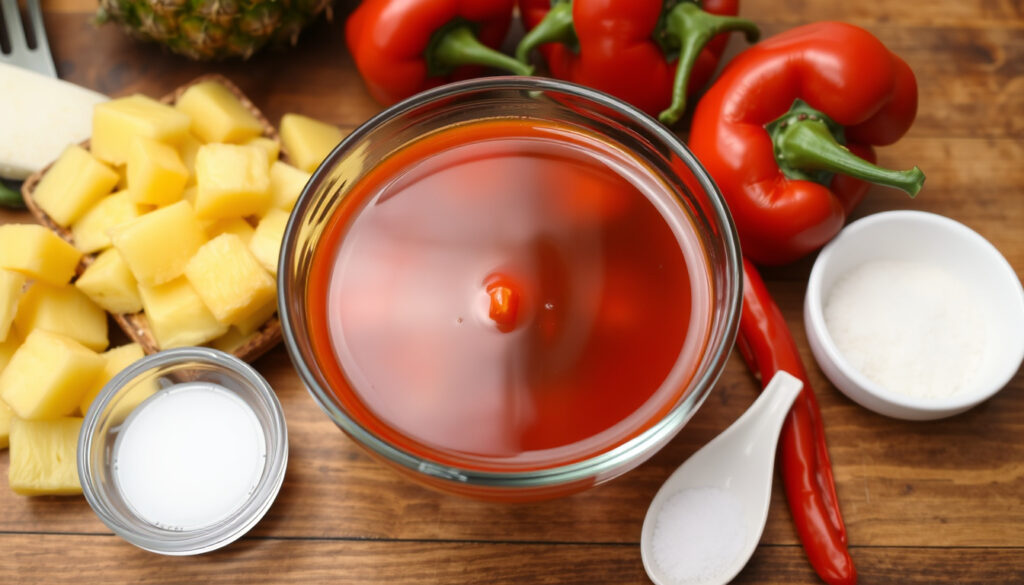
Sweet and Sour Sauce Recipe: The Secret to Balanced Flavor
Anyone who’s tried to recreate that glossy, sweet-tart sauce from their favorite takeout knows it’s harder than it looks because the magic isn’t in a secret ingredient — it’s in the chemistry of balancing acids and sugars. This guide breaks down the science behind the perfect sweet and sour sauce, gives you the essential 4-ingredient base recipe, and explores six delicious variations so you can make it your own.
Essential Ingredients: 4 ·
Prep Time: 5 Minutes ·
Key Secret: Balance of Acids and Sugars ·
Storage: Refrigerate for 2 Weeks
Quick snapshot
- Ketchup, brown sugar, rice vinegar, and soy sauce form the core base of most modern recipes (The Buttery Fairytale)
- A cornstarch slurry is the standard method for thickening (The Cookie Rookie)
- The exact historical origin of sweet and sour sauce as a specific condiment
- Whether pineapple was used originally or added later for Western tastes
- A 5-minute homemade version is achievable using cornstarch for quick thickening (Family Food on the Table)
- Experiment with versions using pineapple juice, fresh ginger, or chili for personalized flavor profiles
Need-to-Know Facts at a Glance
Six key data points — one pattern: the simpler the ingredient list, the easier the sauce clings to fried foods and the faster it comes together.
| Label | Value |
|---|---|
| Total Time | 15 minutes |
| Calories (per tbsp) | 30 |
| Base Ingredients | Ketchup, Sugar, Vinegar, Soy Sauce |
| Thickener | Cornstarch Slurry |
| Dietary Adaptable | Gluten-Free, Vegan |
The implication: this sauce is designed for speed and universal appeal. You can have it on the table in the time it takes to fry a batch of chicken.
How to make a basic sweet and sour sauce?
Gathering the essential ingredients
- Ketchup: Provides umami, color, and a touch of sweetness. Most basic recipes rely on it as the flavor anchor (Allrecipes).
- White or rice vinegar: Delivers the “sour” punch. Rice vinegar offers a milder, cleaner acidity (The Daring Gourmet).
- Brown or granulated sugar: Balances the vinegar. Brown sugar adds molasses notes; white sugar keeps it neutral.
- Soy sauce: Adds savory depth (umami) and a darker color.
- Cornstarch + water: The slurry that thickens the sauce into that glossy, clingy texture (many recipes use this method; see The Daring Gourmet).
Step-by-step cooking instructions
- In a small saucepan, combine ¾ cup white sugar, ⅔ cup water, ⅓ cup white vinegar, ¼ cup soy sauce, and 1 tablespoon ketchup.
- Whisk together 2 tablespoons cornstarch with ¼ cup cold water until smooth.
- Bring the saucepan mixture to a boil over medium-high heat. Stir in the cornstarch slurry.
- Reduce heat to low and simmer for 5 minutes, stirring constantly, until thickened and clear.
- Remove from heat. Taste and adjust sweetness or acidity as needed.
A home cook who starts with this base recipe avoids the high-fructose corn syrup and preservatives in most bottled versions — and gains total control over sweetness and texture.
The catch: the 4-ingredient version is a modern Western convenience, not a historical artifact. Traditional Chinese versions lean on fruit (pineapple) and clear vinegar, no ketchup.
What is the secret to a good sweet and sour?
Balancing the acid and sugar
- Ratio rule: The perfect balance is typically 2 parts sweet to 1 part sour — measured by volume, not taste (The Daring Gourmet).
- Acid choice: Rice vinegar provides a milder, cleaner acidity than white vinegar. It won’t overpower the other flavors.
- Sweetener: Brown sugar adds depth; granulated sugar gives a cleaner sweetness.
The role of umami ingredients
- Ketchup adds both umami (from tomato concentrates) and a deep red color. It’s the shortcut to a restaurant-style look.
- Soy sauce or tamari contributes savory notes that prevent the sauce from being cloying.
- Some recipes add a dash of fish sauce or Worcestershire for extra complexity — but keep it optional.
Achieving the perfect color
- Natural coloring can be achieved with annatto or a pinch of turmeric for a golden hue.
- Ketchup-based sauces turn a deep orange-red; pineapple-based versions are lighter and more transparent.
- The “clear” restaurant style omits ketchup entirely, using only vinegar and sugar — resulting in a translucent sauce.
A home cook chasing authentic Chinese takeout flavor faces a choice: use ketchup for speed and color (American adaptation) or go with pineapple juice for a fruitier, more traditional profile that takes a few more minutes of simmering.
The pattern: every “secret” comes down to controlling the acid-sugar-umami triangle. Miss one, and the sauce tastes either flat, sharp, or one-dimensional.
What are the 4 ingredients in sweet and sour sauce for chicken?
The classic ketchup, vinegar, sugar, and soy sauce base
- The four: ketchup, white vinegar, brown sugar, and soy sauce (as highlighted by The Buttery Fairytale).
- Why it works for chicken: This base is designed to cling to battered, fried protein. The sugar caramelizes slightly when reheated, creating that signature sticky glaze.
- Optional fifth: Pineapple juice is added by many cooks for depth and acidity — technically making it a 5-ingredient sauce.
Why this combination works for battered proteins
- The soy sauce adds saltiness that cuts through the oiliness of fried chicken.
- The cornstarch thickener creates a viscous coating that doesn’t slide off the batter.
- A touch of ketchup gives a red hue that signals “sweet and sour” to the eye.
Why this matters: if you’re making sweet and sour chicken at home, this four-ingredient formula is your fastest path to a familiar taste — but it’s a Western interpretation, not what you’d find in a Guangdong kitchen.
How to make Chinese sweet and sour sauce without pineapple?
Substituting pineapple juice with orange juice or rice vinegar
- Orange juice: Replicates the acidity and natural sweetness of pineapple. Use fresh-squeezed for brightness.
- Rice vinegar: Adds a clean sour punch without fruit flavor. Increase vinegar slightly and add a teaspoon of honey or sugar to compensate for lost sweetness.
- Apple cider vinegar: Works as a substitute, but its distinct apple note will change the final flavor profile.
Adjusting sweetness without pineapple
- Cut sugar by 10-15% compared to a pineapple version, because pineapple brings its own fructose.
- Add a pinch of salt to enhance perceived sweetness without adding more sugar.
- If using orange juice, reduce water by the same volume to maintain consistency.
The implication: authentic restaurant versions often use a clear base without pineapple chunks — the fruit flavor comes from juice alone. You can skip the fruit entirely and still get a tangy, authentic-tasting sauce.
How to make a great sweet and sour sauce?
Adding aromatics: ginger, garlic, and chili
- Fresh ginger: Adds a warm, peppery note that cuts through sweetness. Use a ½-inch piece, grated (Kitchen Sanctuary).
- Garlic: One clove, minced — adds savory depth without overpowering.
- Red pepper flakes or chili: A pinch at the end gives heat that balances the sugar. Many versions include them for a gentle kick.
Using natural coloring agents
- Annatto: Steeped in oil, it releases a vibrant orange-red color without altering flavor.
- Turmeric: A pinch gives a golden tint — use sparingly to avoid an earthy taste.
- Paprika: Adds red color and a subtle smoky note.
Advanced thickening techniques
- Double thickening: Use both cornstarch and a reduction of the liquid base. Simmer without the lid for 5 extra minutes before adding the slurry — this concentrates flavor and thickens naturally.
- Arrowroot powder: A gluten-free alternative that creates a glossier, more translucent finish than cornstarch.
- Xanthan gum: For keto or low-carb cooks, a tiny amount (⅛ tsp) thickens without starch.
The catch: the difference between a “good” sauce and a “great” one is the aromatics. Without ginger and garlic, the sauce tastes flat — like sugary vinegar. With them, it tastes like something from a restaurant kitchen.
How to make sweet and sour sauce with pineapple?
Using fresh pineapple vs. canned
- Fresh pineapple: Provides a brighter, more complex flavor. Core and purée before adding to the saucepan.
- Canned pineapple: Ensures consistency — the juice is always sweet and the chunks are uniformly soft. Preferred in commercial kitchens for reliability (A Beautiful Mess).
- Pineapple chunks: Add body and texture to the finished sauce. Some versions use them as a key structural element.
Creating a pineapple-based sauce from scratch
- Combine ½ cup pineapple juice, ¼ cup brown sugar, 2 tablespoons rice vinegar, 1 tablespoon ketchup, and 1 tablespoon soy sauce in a saucepan (A Beautiful Mess).
- Bring to a simmer over medium heat.
- Whisk in a cornstarch slurry (1 tablespoon cornstarch + 2 tablespoons cold water).
- Simmer for 3 minutes until thickened. Stir in ¼ cup pineapple chunks (optional).
- Remove from heat. Season with a pinch of salt.
The trade-off: fresh pineapple gives a superior flavor but requires extra prep. Canned juice and chunks deliver reliability — choose based on whether you’re cooking for a dinner party or a Tuesday night stir-fry.
The Versions: Three Core Approaches to Sweet and Sour
Three styles, one decision point: the base ingredient that defines the entire flavor profile — ketchup, pineapple juice, or just vinegar.
| Style | Base | Key Ingredients | Color | Best For |
|---|---|---|---|---|
| Classic Chinese (Pineapple Base) | Pineapple juice | Pineapple juice, brown sugar, rice vinegar, soy sauce, cornstarch | Deep orange | Chicken, pork, shrimp stir-fries |
| Simple American (Ketchup Base) | Ketchup | Ketchup, sugar, vinegar, soy sauce, cornstarch | Red-orange | Dipping sauce, quick weeknight meals |
| Clear Restaurant Style | Vinegar and sugar | Rice vinegar, sugar, water, soy sauce, cornstarch | Translucent | Light dishes, white-colored proteins |
The pattern: the more ingredients you add, the more forgiving the sauce. The clear style requires precise timing and ratios; the ketchup base is almost impossible to mess up.
Six Variations to Try
1. Spicy Szechuan Sweet and Sour
- Add 1 teaspoon chili paste (sambal oelek) and ½ teaspoon Szechuan peppercorns to the base recipe.
- Complete with a sprinkle of toasted sesame seeds.
2. Honey-Ginger Sweet and Sour
- Replace brown sugar with ⅓ cup honey and add 1 tablespoon fresh grated ginger.
- Reduce vinegar slightly to compensate for honey’s inherent acidity.
3. No-Sugar-Added (Keto) Version
- Use sugar-free ketchup, a keto-friendly sweetener (allulose or monk fruit), and a pinch of xanthan gum for thickening (Okonomi Kitchen).
- Pineapple juice can be replaced with lemon juice and water.
4. Smoky BBQ Sweet and Sour
- Swap half the ketchup for barbecue sauce.
- Add ½ teaspoon smoked paprika and a dash of liquid smoke.
5. Mango Sweet and Sour
- Replace pineapple juice with mango purée.
- Add a squeeze of lime juice at the end for brightness.
6. Tamarind Sweet and Sour (Southeast Asian Twist)
- Replace rice vinegar with 2 tablespoons tamarind paste.
- Add 1 tablespoon fish sauce for umami.
The implication: the base recipe is a canvas. Every variation changes the target audience — from keto dieters to spice seekers — and the sauce itself becomes a different product.
Expert Quotes on Getting It Right
“The foundation of any great sweet and sour sauce is the balance of acidity and sweetness. If you get that right, everything else is optional.”
— J. Kenji López-Alt, Serious Eats
“Using high-quality ketchup and fresh ginger is the secret to a superior flavor. Don’t skimp on either.”
— Kimberly Killebrew, The Daring Gourmet
“The versatility of this sauce is remarkable — add chili and garlic, and it works with everything from spring rolls to grilled meat.”
— BBC Good Food Test Kitchen
The Takeaway: What This Means for Your Kitchen
Sweet and sour sauce isn’t a single recipe — it’s a formula: acid + sweet + umami + thickener. Once you understand that ratio, you control the final product. The 4-ingredient version is your fastest entry point, but the real payoff comes from experimenting with variations that fit your diet, your pantry, and your palate. For the home cook, the decision is clear: master the base, then personalize the accents. Your takeout cravings will never be the same.
For a foolproof starting point, try this 4-ingredient base recipe which guarantees balanced flavor every time.
Frequently asked questions
Can I make sweet and sour sauce without ketchup?
Is sweet and sour sauce gluten free?
What meat goes best with sweet and sour sauce?
How do I fix a sweet and sour sauce that is too sweet or too sour?
Can I freeze sweet and sour sauce?
What is the difference between sweet and sour sauce and duck sauce?
For more kitchen confidence, check out our guide on Slow Cooker Beef Stew: Tips for Rich, Tender Results and How to Feed Sourdough Starter: Ratios, Schedules, and Tips.
More related posts
 W-9 Form 2026: What Changed, How to Download & Fill
 Three Thousand Years of Longing: Worth Watching? Ending & Guide
 Where to Watch Chicago Bears vs Minnesota Vikings Live (2025)
 Starbucks Red Cup Day 2025: Date, Rules, Free Cup Steps
 Chief of War Episodes: List, Release Dates & Guide
 Ben & Jerry’s Ice Cream: Price, Health, Boycott & Halal Explained
 How Old is the United States? Age in 2024 & 2026 Explained
 Is Five Nights at Freddy’s Kid Friendly? Age Guide & Facts
