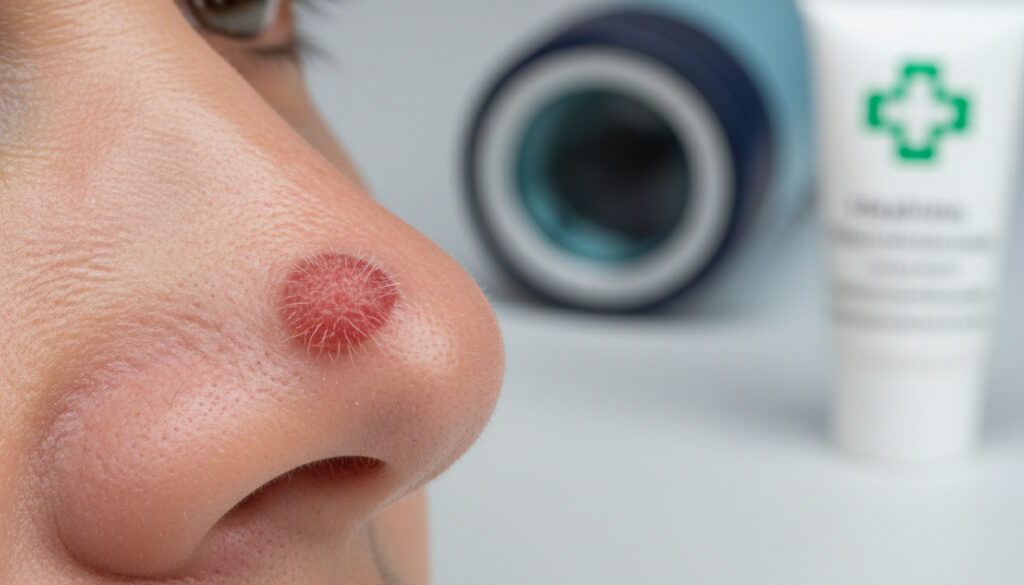
Fibrous Papule of the Nose – Causes, Diagnosis and Treatment
A fibrous papule of the nose is a small, benign growth that commonly appears on or near the nasal tip. These dome-shaped lesions are typically harmless, measuring less than 5 millimeters in diameter, and present as smooth, firm bumps that may be skin-colored, white, reddish, or brown.
Despite their benign nature, fibrous papules often concern patients due to their prominent facial location and resemblance to certain skin cancers. Understanding the characteristics, causes, and diagnostic criteria helps distinguish these common lesions from more serious conditions while guiding appropriate management decisions.
Medical literature classifies fibrous papules as variants of angiofibromas, representing localized overgrowths of dermal tissue. While they require no medical intervention, many individuals seek removal for cosmetic reasons or to confirm the diagnosis through histopathological examination.
What Is a Fibrous Papule of the Nose?
Benign skin lesion composed of fibrous tissue and dilated vessels
Typically nose tip or sides; occasionally adjacent facial areas
Dome-shaped, smooth, shiny surface, firm to touch
Common in adults; peaks during middle age
Key Characteristics
- Non-cancerous: Totally benign with no malignant potential
- Asymptomatic: Usually causes no pain, itching, or discomfort
- Stable: Remains consistent in size for months to years
- Cosmetic concern: Primary impact is aesthetic rather than medical
- Common mimic: Can resemble basal cell carcinoma clinically
- Spontaneous resolution: May disappear without treatment over time
| Feature | Description |
|---|---|
| Size | Less than 5 mm (typically 3-6 mm) |
| Shape | Dome-shaped or hemispherical |
| Texture | Smooth, shiny, firm |
| Color | Skin-colored, white, reddish, or brown |
| Onset | Late adolescence to early adulthood |
| Duration | Months to years; sometimes permanent |
| Symptoms | Typically none; cosmetic concern only |
| Malignant potential | None |
According to dermatological references, these lesions represent localized fibro-histiocytic proliferations that present as discrete papules on the nasal skin. The Cleveland Clinic notes that while visualization suggests the diagnosis, microscopic examination provides definitive confirmation.
What Causes a Fibrous Papule of the Nose?
The exact etiology of fibrous papules remains unknown. Research indicates they result from an overgrowth of dilated blood vessels, fibroblast cells, and collagen within the dermis. This proliferation creates the characteristic firm, fibrous consistency of the lesion.
Development may correlate with the aging process, explaining their increased prevalence among middle-aged adults. While most cases occur sporadically without underlying conditions, the presence of multiple fibrous papules can signal specific genetic disorders.
Associated Genetic Conditions
Multiple lesions occasionally indicate systemic syndromes requiring further evaluation:
- Tuberous sclerosis complex
- Birt-Hogg-Dubé syndrome
- Multiple endocrine neoplasia type 1 (MEN1)
While single fibrous papules are overwhelmingly common and benign, the presence of multiple lesions warrants dermatological assessment to rule out associated genetic syndromes. However, multiple papules can also exist without any underlying disorder.
As DermNet NZ explains, these lesions are common and may affect anyone, typically appearing during late adolescence and early adulthood.
Is a Fibrous Papule Cancerous or Dangerous?
Fibrous papules are totally benign and carry no malignant potential. They will never become cancerous, distinguishing them fundamentally from skin cancers like basal cell carcinoma or melanoma.
Growth Patterns
These lesions typically remain stable for months to years. They may appear suddenly, persist indefinitely, and occasionally reduce in size or disappear spontaneously without treatment—a process that may take several months to years. Continuous growth or change in characteristics is atypical and warrants medical evaluation.
While inherently benign, any lesion showing rapid growth, ulceration, bleeding, or significant color change requires professional assessment to exclude malignant conditions such as Basal cell carcinoma.
How Is a Fibrous Papule Diagnosed?
Diagnosis relies primarily on clinical examination and histopathological confirmation. Visual inspection alone may suggest the diagnosis, but definitive confirmation requires microscopic examination of tissue.
Biopsy and Histopathology
Skin biopsy or histopathology of surgically removed tissue confirms the diagnosis. Microscopic examination reveals distinctive features including proliferation of fibroblasts, stellate and spindle cells, multinucleated cells, fibrotic stroma, and dilated blood vessels. These characteristics overlap with other angiofibromas, leading to classification of fibrous papules as variants of angiofibroma.
Differential Diagnosis
Fibrous papules can resemble several other skin lesions, necessitating careful differentiation:
- Basal cell carcinoma (skin cancer causing itching, continuous growth, sores)
- Melanocytic naevus
- Dermatofibroma
- Nevocytic nevus
- Neurofibroma
- Pyogenic granuloma
- Adnexal neoplasms (trichoepithelioma, trichofolliculoma)
The critical distinction from Basal cell carcinoma lies in the benign, static nature of fibrous papules versus the progressive, potentially destructive behavior of malignancies.
While experienced clinicians may recognize fibrous papules visually, biopsy remains the gold standard for definitive diagnosis, particularly when lesions display atypical features or when patients have history of skin cancer.
How Do You Get Rid of a Fibrous Papule?
Medical intervention is not required for fibrous papules. However, removal options exist for cosmetic purposes or when diagnostic confirmation is necessary.
Removal Methods
Several approaches effectively remove these lesions:
- Shave biopsy: Removal of the entire papule for diagnostic testing
- Excision: Surgical removal with scalpel
- Cryotherapy: Freezing with extremely cold temperatures
- Laser or light therapy: Medical-grade laser treatment
- Electrosurgery: Removal using electric currents
According to clinical guidelines, removal generally results in excellent healing, though a tiny scar may occasionally remain. Recurrence is rare following complete removal, though underlying genetic conditions may cause new lesions to develop elsewhere.
How Does a Fibrous Papule Progress Over Time?
-
Lesion appears suddenly, typically during late adolescence or early adulthood
-
Papule reaches fixed size (usually <5mm) and remains stable for months to years
-
Lesion maintains consistent appearance without symptoms or complications
-
Either remains indefinitely or gradually reduces/disappears spontaneously over months to years
What Do We Know vs. What Remains Unclear?
Established Facts
- Benign fibro-histiocytic tumor with no malignant potential
- Composed of fibroblasts, collagen, and dilated vessels
- Common in adults aged 30-50
- Diagnosis confirmed through histopathology
- Asymptomatic except for cosmetic appearance
Uncertain Aspects
- Precise triggering mechanisms for initial development
- Why some resolve spontaneously while others persist
- Exact relationship to aging processes
- Specific genetic factors in sporadic cases
Why Do Fibrous Papules Matter?
Fibrous papules represent one of the most common reasons for dermatology consultations regarding nasal bumps. Their significance lies primarily in differential diagnosis—distinguishing these harmless growths from Basal cell carcinoma and other malignancies that require urgent treatment.
For patients, understanding that these lesions pose no health risk provides reassurance against cancer anxiety. For clinicians, recognizing the typical presentation prevents unnecessary aggressive interventions while ensuring appropriate biopsy of atypical lesions.
Expert Perspectives on Fibrous Papules
Fibrous papules are harmless lesions that typically do not cause any symptoms. They are asymptomatic except for their visible appearance, which may affect self-esteem and psychological well-being.
— Cleveland Clinic
These lesions are totally benign and will never become cancerous. They typically remain stable for months to years.
— Buffalo Medical Group
Fibrous papules are common and may affect anyone. Multiple fibrous papules can exist without any underlying disorder.
— DermNet NZ
What Should You Do About a Fibrous Papule?
If you notice a small, dome-shaped bump on your nose that matches the description of a fibrous papule, no immediate action is necessary. Monitor the lesion for changes, avoid picking or attempting home removal, and schedule a dermatology consultation if you desire cosmetic removal or if the lesion exhibits any atypical features such as rapid growth, bleeding, or ulceration. Professional evaluation ensures proper diagnosis and safe, effective treatment if desired.
Frequently Asked Questions
Does a fibrous papule of the nose grow over time?
Typically, fibrous papules remain stable in size for months to years. They usually do not enlarge progressively, which helps distinguish them from malignant lesions. Some may spontaneously reduce in size or disappear entirely over time.
Is a fibrous papule dangerous?
No, fibrous papules are completely benign and pose no danger to health. They are non-cancerous and do not transform into skin cancer, though they should be monitored for atypical changes.
Can I pop or squeeze a fibrous papule?
No, attempting to pop or squeeze a fibrous papule is ineffective and potentially harmful. Unlike pimples, these are solid fibrous growths without extractable material. Manipulation may cause inflammation, infection, or scarring.
Will a fibrous papule go away on its own?
Sometimes. While many fibrous papules persist indefinitely, it is common for them to reduce in size or disappear spontaneously without treatment. This natural resolution may take several months to years.
How is a fibrous papule different from a skin tag?
Fibrous papules are firm, dome-shaped lesions containing fibrous tissue and blood vessels, typically appearing on the nose. Skin tags (acrochordons) are soft, pedunculated growths of loose fibrous tissue, commonly found on neck, armpits, or groin.
When should I see a doctor for a nose bump?
Consult a dermatologist if the bump changes rapidly, bleeds, ulcerates, itches persistently, or if you are uncertain about the diagnosis. Professional evaluation distinguishes benign fibrous papules from conditions requiring treatment.
Is fibrous papule removal covered by insurance?
Generally not. Since fibrous papules are benign and asymptomatic, removal for cosmetic reasons is typically considered elective and not covered by insurance. Biopsy for diagnostic purposes may be covered if medically indicated.
More related posts
 Oxycodone 5 mg Opinie: Reviews, Effects & Dosage Guide
 Man United vs Barcelona: Head-to-Head Record & History
 Radiance of the Seas – Guide to Specs, Decks and Itineraries
 How Many Ounces in a Shot? US and Global Sizes
 Is Five Nights at Freddy’s Kid Friendly? Age Guide & Facts
 Minions: The Rise of Gru Cast – Full Voice Actors 2022
 Real Madrid Game Today: Schedule, Watch, Score & Mbappé Status
 According to Jim Cast: Why Key Actors Left
