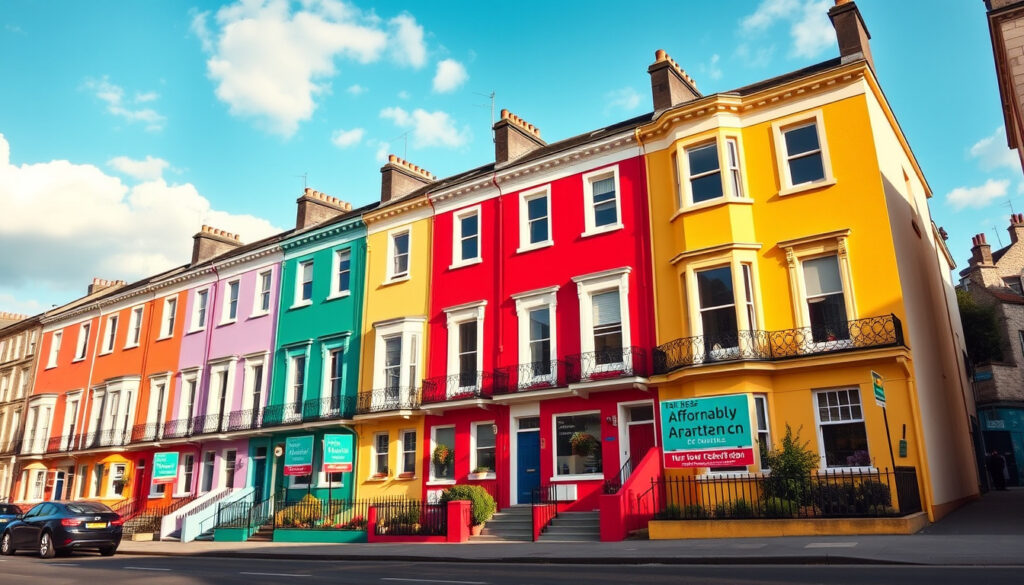
2 Bedroom Apartments Near Me: Cheap Dublin Rentals Guide
Dublin’s 2-bedroom rental market splits cleanly between premium central districts and affordable outer neighborhoods — Daft.ie listings show 2-beds ranging from €2,750 in Dublin 12 to over €4,300 in Grand Canal Dock, a €1,500 monthly gap that compounds into tens of thousands saved annually depending on where you sign. This guide maps where the real deals hide, what the numbers actually look like across key districts, and the exact moves you need to make before signing.
Apartments to rent in Ireland: 1,220 ·
Sample 2-bed rent: €3,400/month ·
Dublin 12 more affordable 2-bed: €2,750 ·
Naas properties available: 21 ·
Rent pressure zone: Dublin
Quick snapshot
- Spotahome lists 76 two-bedroom apartments for rent in Dublin, with 58 verified properties (Spotahome)
- Daft.ie lists 49 apartments for rent in Dublin 2, with 2-bed options starting around €2,453 per month (Daft.ie)
- Student and expat demand drives competition for 2-bed units citywide (HousingAnywhere)
- Open viewing at One Lime Street on 16 Dec (Daft.ie)
- Blueground Meath Place available from 09 Jan 2026 (Blueground)
- Daft.ie Dublin City shows 1,108 properties total, confirming high overall supply despite localized pressure
- Cost rental schemes like LDA 2-beds at €990/month offer government-backed path for eligible applicants
Rental price comparisons across Dublin districts reveal stark contrasts between premium central zones and more accessible outer neighborhoods — the data below quantifies exactly how much location costs you month-to-month.
| Metric | Value | Source |
|---|---|---|
| Total Ireland apts for rent | 1,220 | Daft.ie |
| Naas properties available | 21 | Daft.ie Naas |
| Sample 1-bed rent | €2,550/month | Daft.ie |
| Sample 2-bed rent | €3,400/month | Daft.ie |
| LDA 2-bed cost rental | €990/month | Gov.ie |
| Spotahome verified 2-beds | 58 properties | Spotahome |
| Daft.ie Dublin 2 listings | 49 apartments | Daft.ie |
What is the cheapest area to rent in Dublin?
Dublin 12 consistently emerges as the most wallet-friendly district for 2-bedroom hunters who refuse to abandon all hope of a reasonable commute. Brickfield Square in particular offers 2-bed apartments at €2,750 per month, which sounds almost reasonable by Dublin standards until you remember that Dublin 2 averages still crawl above €3,000 on the same platforms. The difference translates to roughly €3,000 saved annually compared to central Dublin 2 — money that buys a lot of groceries, let alone a weekend away. Some listings in Dublin 12 even bundle perks like free Wi-Fi promotions, which you’ll never find in Grand Canal Dock.
The catch is proximity. Dublin 12 sits about 30 minutes from Stephens Green by Luas, and the neighborhoods lack the restaurant density and walkability that make central Dublin livable on foot. If you work in the IFSC or near Grafton Street, that commute adds up in both time and Translink costs. But if you’re willing to trade postcode prestige for actual savings, Dublin 12 rewards your pragmatism with numbers that don’t require a dual income to qualify.
Cheap 2-bed options under €2,500 are rare in central Dublin 2, with most starting above €2,800 on Daft.ie. Head to Dublin 12 or consider outer towns like Naas to escape the premium.
- Naas and Drogheda present the next tier of savings for commuters willing to trade city access for lower rents
- Dublin 12 offers the best cost-to-commute ratio for those working south of the River Liffey
- Areas like Brickfield Square provide more affordable 2-bed at €2,750 vs Dublin 2 averages over €3,000
The implication for budget-focused renters is straightforward: Dublin 12 and outer towns like Naas deliver the math that Dublin 2 simply cannot — lower monthly rents offset the commute cost for anyone working southside or with remote-capable employment.
Areas like Naas and Drogheda
Naas, roughly 35 kilometers south of Dublin, listed 21 properties on Daft.ie at last count — modest supply, but prices undercut the capital substantially. Drogheda, an hour north by train, follows the same pattern: lower base rents, fewer frills, but a manageable commute if you land a remote-capable role or work locally. Both towns serve as pressure-release valves for renters priced out of Dublin proper, and both are worth checking if your employer has flexibility on location or you’re comfortable with a structured commute schedule.
Student and pro options
Spotahome catalogs 76 two-bedroom apartments across Dublin, with 52 properties marked as ideal for students and couples. The platform emphasizes verified listings, no-deposit options for 31 rentals, and pet-friendly terms for 35 units — practical features that matter more than glossy photos when you’re budgeting monthly cash flow. For professionals, the same platform surfaces Silicon Docks options where tech-company adjacency drives both demand and price, so adjust expectations accordingly based on which neighborhood you’re targeting.
What is the cheapest city in Ireland for rent?
Dublin consistently ranks as Ireland’s most expensive city for residential rent, which means every alternative offers meaningful savings — at the cost of urban density, career density, and the social ecosystem that draws people to cities in the first place. Limerick, Galway, and Cork all run meaningfully cheaper, with average rents for comparable properties hovering 20–40% below Dublin levels depending on the quarter and neighborhood. The exact gap shifts with market conditions, but the directional signal never reverses: outside Dublin, your euro stretches further.
Student towns across Ireland present the sharpest deals, particularly university-adjacent neighborhoods where landlords compete for the semester crowd. Barrack Street in Limerick and areas near NUI Galway exemplify this pattern, with room-and-apartment combos that rarely appear in Dublin market data. The trade-off is obvious — you’re choosing affordability over career opportunity density — but for students, early-career workers in portable industries, or anyone with remote flexibility, these towns merit serious consideration.
Rentberry reports average rent for 2-bed apartments in Dublin at €11,450, though specific listings show lower prices around €1,400–€4,000. That gap reflects how aggregate averages can mislead — always check actual listing prices for your target area and unit type.
Beyond Dublin
Limerick city center offers 1-bedroom apartments competitive with Dublin 12’s pricing, often 30–40% below what Dublin 2 commands for comparable units. Galway trades some of Limerick’s industrial economy for a stronger tourism and arts scene, keeping residential demand solid without Dublin’s speculative pressure. Cork operates similarly, with University College Cork neighborhoods offering student-heavy rental pools that keep prices moderate relative to Dublin’s pressure-cooker dynamics.
Student towns 2025
The 2025 landscape for student housing across Ireland remains tight but navigable. University-adjacent streets in Galway, Limerick, and Waterford consistently post lower per-bedroom rates than Dublin equivalents, and the gap widens when comparing 2-bedroom whole-unit rentals rather than per-person pricing. For students sharing a 2-bed unit, the per-person cost in a student town like Maynooth or Tralee drops below what Dublin charges for a single room in a shared house. Smart renters check university towns first before assuming Dublin is the default option.
Where is the nicest part of Dublin to live in?
“Nicest” depends entirely on what you value — proximity to work, restaurant density, green space access, or community vibe all rank differently depending on who you ask. Dublin 2 remains the default answer for those prioritizing walkability to the city center, with Fitzwilliam Square, Tara Street, and Pembroke Street Upper forming a cluster of premium rental territory where you pay for the address more than the apartment itself. Grand Canal Dock represents the premium waterfront option, with 2-bed rents from €3,150 to €4,128 that reflect the tech-company adjacency and the Docklands lifestyle pitch.
The Liberties offers a different proposition: historic character, a growing food and craft scene, and furnished short-term options like Blueground’s Meath Place units available from 09 Jan 2026. The neighborhood lacks the polish of Docklands but compensates with authenticity and shorter walks to St. Stephen’s Green than Dublin 12 residents manage. For renters balancing cost against lifestyle quality, The Liberties deserves a spot on your shortlist.
Best neighborhoods for renters
Grand Canal Dock leads for those prioritizing modern finishes and waterfront views, with Capital Dock Residence offering 2-bed units at €3,527 and €4,311 per month — clearly pitched at professionals with generous expense accounts or employer housing support. Dublin 2 broadly remains the premium zone, where One Lime Street, Pembroke Row, and College Gate all post 2-bed rents above €2,749, clustering tightly in the €2,800–€3,100 range.
The pattern becomes clearer when you map prices geographically: everything south of the Liffey and west of the Grand Canal commands a premium. Dublin 12 breaks this pattern consistently, with Brickfield Square offering the same 2-bed configuration at €2,750 — roughly €350 cheaper than comparable Dublin 2 stock. That gap funds a year of streaming subscriptions and then some.
Balance of cost and lifestyle
Brickfield Square in Dublin 12 illustrates the cost-lifestyle tradeoff better than anywhere else in Dublin. You sacrifice some restaurant density and the IFSC commute requires a Luas leg, but you gain actual affordability without fleeing to Naas or Drogheda. For renters who work in the city center but can’t stomach Dublin 2 pricing, Dublin 12 solves the equation that otherwise leaves you commuting from Leitrim or sharing with strangers into your thirties.
Grand Canal Dock is a premium area with 2-bed rents from €3,150 to €4,128, while Dublin 12 areas like Brickfield Square have more affordable 2-bed at €2,750 vs Dublin 2 averages over €3,000. The neighborhood choice alone can mean €300–€500 monthly in savings — real money for anyone budgeting around median Dublin salaries.
What this means for renters with a fixed housing budget: Dublin 12 and The Liberties deliver better value per square foot than premium zones, making them the rational choice for anyone whose priority is housing quality over postcode prestige.
What questions should I ask before renting?
Dublin’s rental market rewards preparation more than most cities. Listings move fast, landlords receive dozens of enquiries on desirable units, and signing delays cost you the apartment. Before you contact anyone, confirm your rental allowance — your income or employment status qualifies you for the property — and understand that Dublin landlords increasingly require proof of income exceeding 3–4× the monthly rent. If that math doesn’t work for you, either find a co-signatory or reconsider your target area.
When you find a property worth pursuing, request the full tenancy agreement before paying anything. Read it once, then read it again with specific attention to deposit return conditions, maintenance responsibility lines, and any clause about rent reviews. A landlord who refuses to share the agreement before you pay is a landlord worth avoiding. Cross-check the listed rent against recent comparable listings on Daft.ie — if the price looks too good, it usually is.
Key renter checklist
- Confirm income exceeds 3–4× monthly rent before applying
- Request the full tenancy agreement before paying any deposit
- Verify the landlord actually owns the property — ask for proof of ownership
- Check whether utilities, broadband, and building service charges are included
- Ask about maintenance response times and what’s covered under landlord responsibility
- Confirm any rent review mechanism and how much notice you’re entitled to
- Document the property’s condition with photos before moving in — essential for deposit recovery
- Check if the property is registered with the Private Residential Tenancies Board
Sample questions
- “Can I see the full tenancy agreement before paying a holding deposit?”
- “What proof of property ownership can you provide?”
- “Are utility bills included, or will I set up my own accounts?”
- “What’s the average response time for maintenance requests?”
- “How is the deposit returned at the end of the tenancy?”
- “Is the property registered with the PRTB?”
- “What are the conditions for rent increases during my tenancy?”
The pattern landlords follow in Dublin’s competitive market: applicants who arrive prepared, with documentation ready and questions pre-written, move faster through the process than those who wing it. That speed advantage translates directly to securing the apartment versus losing it to a more prepared applicant.
Is it better to rent or buy?
The rent-versus-buy question in Dublin deserves a better answer than “it depends,” though the honest answer still starts there. The mathematics favor buying for long-term residents who can accumulate a deposit and secure a mortgage at current rates — but “long-term” is doing heavy lifting in that sentence. If your career, relationship, or family plans involve Dublin for the next decade, property ownership builds equity instead of enriching your landlord. If your tenure is uncertain, the flexibility of renting outweighs the investment argument.
For single-income households earning around €3,000 monthly, Dublin homeownership currently sits out of reach on most salaries without dual-income partnership or family support on the deposit. Monthly mortgage costs at today’s rates, combined with property tax, maintenance reserves, and insurance, often exceed equivalent rental costs even before accounting for the substantial upfront deposit requirement. Prospective buyers should check current Irish Mortgage Council rates and compare against the actual rental cost of comparable properties in their target neighborhood before assuming buying always wins.
Rentberry reports average rent for 2-bed apartments in Dublin at €11,450, though specific listings show lower prices around €1,400–€4,000. That inflated average reflects how aggregate data can mislead — always use actual listing comparables when modeling rent versus buy scenarios, not platform-wide averages.
Rent vs buy factors
The rent-versus-buy calculation hinges on four variables: deposit size, mortgage rate, tenure length, and property appreciation assumptions. Dublin’s property market has historically appreciated, though the 2023–2024 period saw corrections in some segments. Prospective buyers should check current Irish Mortgage Council rates and compare against the actual rental cost of comparable properties in their target neighborhood before assuming buying always wins.
Renting wins on flexibility, especially in Dublin’s competitive market where buying requires substantial upfront capital and ongoing financial commitment. Renters can relocate for career opportunities, adapt to changing family situations, and avoid the maintenance surprises that owning property inevitably delivers. The trade-off is real: every rent payment builds your landlord’s equity instead of yours.
Dublin market specifics
Dublin 2 remains the most expensive district for both renting and buying, with 2-bed apartments ranging from €2,749 to €4,311 per month on current Daft.ie listings. Capital Dock Residence exemplifies the premium segment at €3,527–€4,311 for 2-bed units in a waterfront building. For renters in these areas, the monthly cost approaches what a mortgage would cost on the same property — but without the deposit barrier.
The implication for buyers is stark: Dublin 2 property prices reflect decades of accumulated demand, and the mortgage required to purchase comparable units often exceeds the rental cost on a month-to-month basis. Budget-conscious buyers should explore Dublin 12, The Liberties, or outer suburbs where the price-to-rent ratio favors ownership more clearly than in premium postcode territory.
How much is a good salary in Dublin for renting?
Dublin landlords typically require proof of income exceeding 3–4× the monthly rent — a screening standard that effectively sets the floor for what constitutes a “good” salary in the rental market. At a €3,000 monthly salary, the math allows roughly €750–€1,000 in qualifying rent, which puts central Dublin 2 completely out of reach for 2-bedroom units starting at €2,749. Even Dublin 12’s more affordable €2,750 options require income approaching €10,000 monthly to meet the qualification threshold comfortably.
The reality for Dublin renters: single-income households earning under €8,000 monthly face a structural barrier in the 2-bedroom market. Dual-income partnerships, co-signatories from family members, or government cost rental schemes like LDA units at €990/month become the realistic pathways for average earners. High earners in tech, finance, and healthcare navigate Dublin’s premium market with less friction, but median salaries leave most renters choosing between location and space.
A single tenant earning Dublin’s median salary cannot qualify for most 2-beds in Dublin 2 without a co-signatory. The gap between average earnings and rental qualification requirements explains why flat-sharing and outer-suburb living remain so common among young Dublin renters.
What this means for anyone job-hunting in Dublin: factor the income-to-rent qualification into salary negotiations. A €5,000 monthly salary qualifies for rent up to €1,250–€1,667, still below most 2-beds, while €10,000 monthly opens qualification for rent up to €2,500–€3,333 — finally entering Dublin 12 territory. Negotiate accordingly.
What is the cheapest way to live in Dublin?
The cheapest path through Dublin’s rental market runs through three strategies: location arbitrage, platform efficiency, and eligibility optimization. Location arbitrage means choosing Dublin 12 or outer towns like Naas over premium central districts — the €300–€500 monthly gap between Dublin 2 and Dublin 12 compounds into €3,600–€6,000 saved annually, money that funds groceries, transport, or emergency savings. Platform efficiency means filtering for no-deposit options on Spotahome (31 listings) and pet-friendly units (35 listings) to reduce upfront costs that often block otherwise qualified renters.
Eligibility optimization targets government cost rental schemes — LDA 2-bedroom units at €990/month cost roughly 30% of what market-rate Dublin 2 units charge, representing the single biggest savings lever available to eligible applicants. The trade-off is waiting lists and income caps, but for households meeting the criteria, the savings justify the application effort.
Cheap 2-bed options under €2,500 are rare in central Dublin — most listings start above €2,800, with premium areas like Grand Canal Dock running €3,150–€4,128. Any listing significantly below market rate warrants extra verification to rule out scams.
- Prioritize Dublin 12 over Dublin 2 to save €300–€500 monthly on equivalent 2-beds
- Filter platforms for no-deposit and pet-friendly options to reduce upfront costs
- Apply for LDA cost rental schemes — €990/month vs €2,750+ market rate for eligible households
- Consider flat-sharing to halve per-person costs while building Dublin tenure
- Avoid premium waterfront and city-center neighborhoods unless employer-subsidized
The implication for budget-focused renters: Dublin punishes those who default to premium neighborhoods, rewarding those who research the cost-to-commute ratio before signing. The cheapest way to live in Dublin means accepting a longer Luas ride or a town commute in exchange for housing costs that don’t consume half your paycheck.
How to find affordable 2-bed apartments in Dublin
The practical search starts with platform selection and systematic filtering. Daft.ie remains Ireland’s dominant rental platform, listing 49 apartments in Dublin 2 and 1,108 properties across Dublin City at last count. Spotahome complements this with 76 two-bedroom listings across Dublin, 58 of them verified — a useful filter when you’re trying to separate legitimate offers from scams that plague every major rental market. HousingAnywhere serves the mid-term and long-term market with particular strength in verified listings for students and expats.
Filtering effectively matters more than expanding your search geographically. Set price floors and ceilings based on your actual budget, select 2-bed configuration specifically, and sort by newest listing date rather than price — new stock moves within hours in desirable neighborhoods, and the cheapest unit from last month is gone. The rental landscape shows 31 Spotahome listings with no deposit requirement and 35 allowing pets, features worth filtering for if they matter to your household.
The district-by-district pricing breakdown reveals where your search should concentrate: Dublin 2 commands €2,749–€3,442 for 2-beds, Grand Canal Dock premium pricing runs €3,150–€4,311, Dublin 12 offers the most accessible entry point at €2,750, The Liberties provides furnished options from Blueground at comparable rates, and Spotahome aggregators surface options as low as €1,800 in cheaper neighborhoods. Match your budget to these ranges before touring units.
| District/Area | Typical 2-bed Rent | Key Platform | Notes |
|---|---|---|---|
| Dublin 2 (City Centre) | €2,749–€3,442 | Daft.ie | Premium location, high competition |
| Grand Canal Dock | €3,150–€4,311 | Daft.ie | Tech-adjacent, waterfront premium |
| Dublin 12 (Brickfield) | €2,750 | Daft.ie | Most affordable city option |
| The Liberties (Meath Place) | Furnished options from €3,000 | Blueground | Short-term ready, available Jan 2026 |
| Naas (outer suburb) | Lower than Dublin | Daft.ie | 21 listings, 35km from city |
| Spotahome Dublin overall | €1,800–€2,500 | Spotahome | Cheapest verified options, aggregator |
Upsides
- Dublin 12 offers 2-beds at €2,750 — significantly below Dublin 2 averages
- Spotahome lists 76 two-bedroom apartments in Dublin, 58 verified — substantial supply
- 31 rentals on Spotahome require no deposit — lower upfront costs
- 35 listings allow pets — important for animal-owning renters
- Naas and Drogheda present outer-town options with lower base rents
- LDA cost rental schemes offer 2-beds at €990/month for eligible applicants
Downsides
- Cheap 2-bed options under €2,500 are rare in central Dublin 2
- Student and expat demand drives competition citywide
- Daft.ie notes open viewings for properties — first-view-first-served dynamics
- Rentberry’s average of €11,450 appears inflated vs. actual listings at €1,400–€4,000
- Most 2-beds in Dublin 2 start above €2,800 — requires high income qualification
- Limited supply in outer towns means fewer choices despite lower prices
The pattern renters encounter across Dublin’s major platforms: supply exists at every price point, but the lowest entries (€1,800–€2,500 range on Spotahome) concentrate in outer neighborhoods and older stock, while premium central units cluster above €3,000. Filter accordingly and move fast — the €2,750 Brickfield Square unit that appeared Monday may be gone by Friday.
Rental steps
- Set your budget and location filters — Decide your maximum rent, preferred districts, and must-have features (pet-friendly, no deposit, furnished). Use Daft.ie as your primary platform supplemented by Spotahome for verified options.
- Check income qualification requirements — Most Dublin landlords require proof of income exceeding 3–4× monthly rent. Confirm this before pursuing applications to avoid wasting time on properties you can’t qualify for.
- Contact landlords promptly on new listings — Dublin rental listings move fast. When you find a match, enquire immediately rather than waiting to compare options.
- Request the full tenancy agreement before paying — Never pay a holding deposit without reading the complete rental contract. Check deposit return conditions, maintenance responsibilities, and rent review clauses.
- Verify landlord ownership — Ask for proof that the person offering the property actually owns or manages it. This protects you from rental scams that target Dublin’s high-demand market.
- Document the property condition before moving in — Take timestamped photos of every room, noting any existing damage. This documentation is essential for deposit recovery at the end of your tenancy.
- Register your tenancy with the PRTB — Ensure your landlord registers the tenancy with the Private Residential Tenancies Board. This registration protects your rights as a tenant under Irish law.
Find the best selection of two bedroom apartments to rent in Dublin. ✓ Students ✓ Expats ✓ Professionals ⚡️Verified accommodations
— Spotahome rental platform
Two-bedroom apartments for students, expats and young professionals in Dublin are always in high demand.
Waterfront living at its best
— Capital Dock Residence listing on Daft.ie
Dublin’s 2-bedroom rental market divides cleanly between premium central districts and more accessible outer neighborhoods. Grand Canal Dock and Dublin 2 command €3,000+ monthly for most 2-bed units, while Dublin 12 offers the same configuration at roughly €2,750 — meaningful savings that compound into thousands annually. For renters willing to commute or explore towns like Naas and Drogheda, the savings stretch further still.
The platform landscape is mature enough that most renters find workable options across Daft.ie, Spotahome, and HousingAnywhere, with the main variables being location choice and the speed of your response to new listings. The demand is real — students, expats, and young professionals all compete for the same units — but the supply side has expanded enough that systematic searching usually turns up viable options within weeks rather than months.
For Dublin renters watching their budget, the path forward is clear: prioritize Dublin 12 and outer suburbs over premium central districts, filter platforms for no-deposit and pet-friendly options if relevant, and move fast when viable listings appear. The €300–€500 monthly savings from neighborhood choice alone buys breathing room in a rental market that rarely offers any.
Related reading: Moving Company Near Me · Kitchen Remodel Near Me Ireland
For renters considering a smaller footprint, the cheap 1-bed Dublin guide details affordable 1-bedroom options amid Dublin’s tight market.
Frequently asked questions
How much is average rent for 2 bedroom apartments in Dublin?
Average rents vary significantly by district. Dublin 2 typically ranges from €2,749 to €3,442 monthly for 2-beds, while Grand Canal Dock runs €3,150 to €4,311. Dublin 12 offers more affordable options around €2,750. Rentberry’s reported average of €11,450 appears inflated compared to actual listing prices.
What are cost rental options near Dublin?
The Land Development Agency (LDA) offers cost rental 2-bedroom units at €990/month for eligible applicants — substantially below market rates. These government-supported schemes target households meeting specific income criteria and typically have waiting lists. Check gov.ie for current eligibility requirements and application processes.
Are there cheap 2 bedroom apartments in Naas?
Naas has 21 properties available on Daft.ie, with prices running below Dublin equivalents for comparable units. The town sits roughly 35 kilometers south of Dublin with train access. For renters willing to commute or work locally, Naas offers meaningful savings compared to living within the Dublin city boundary.
What is rent like in Drogheda?
Drogheda operates at lower price points than Dublin for similar unit types, making it attractive for commuters or those working in the Louth/Meath region. The town is about an hour north of Dublin by train. Specific listing prices in Drogheda run 20–40% below Dublin equivalents depending on the property type and condition.
How does salary cover Dublin rents?
Most Dublin landlords require proof of income exceeding 3–4× the monthly rent. A €3,000 monthly salary would typically qualify for rents up to €750–€1,000 — far below most 2-bedroom listings. Single-income households often need dual-income partnerships, co-signatories, or must consider outer suburbs or shared arrangements to meet qualification requirements.
What are student apartment deals in Ireland?
Student towns like Limerick, Galway, and Waterford offer the cheapest per-bedroom rates, particularly near universities. Spotahome lists 52 properties ideal for students and couples. University-adjacent neighborhoods consistently undercut city-center pricing, and shared 2-bedroom units in student towns often cost less per person than a single room in Dublin.
Are private landlord 2-beds cheaper?
Private landlords sometimes offer lower prices than corporate-managed buildings, but the difference varies by property and market conditions. The main advantages of private landlord arrangements are negotiating flexibility and faster decision-making. Always verify ownership and read the full tenancy agreement regardless of landlord type.
More related posts
 Water Shoe for Women: Be t Pick Te ted & Reviewed
 Free Food Near Me: 7 Legit Ways to Get Meals Today
 Does Max Die in Stranger Things? Season 4 Spoilers Explained
 Jake Paul vs Chavez: Results and Fight Recap
 How Long Does a Period Last? Normal Length, Cycles, and Signs
 What Is Normal Blood Sugar? Levels & Warning Signs
 What is the Next Holiday in Ireland? 2026 Bank Holiday Dates
