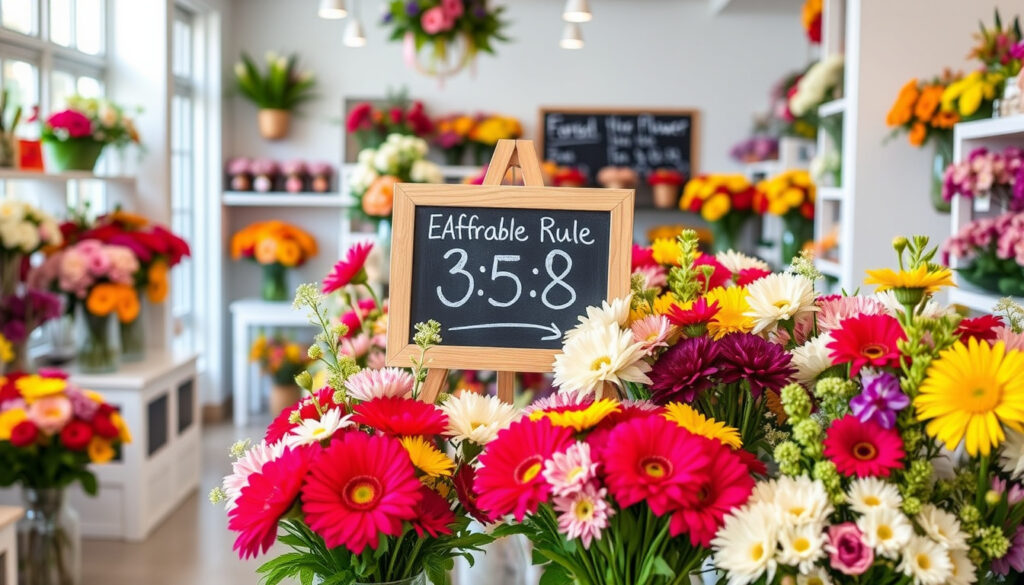
Flower Shops Near Me: Cheap Tips & 3:5:8 Rule (2025)
Anyone who has ever grabbed a bouquet from a supermarket only to watch it droop by day two knows the frustration. But there is a smarter way: combine the 3:5:8 flower arranging rule with Irish-grown seasonal blooms, and you can get arrangements that last up to two weeks without spending a fortune.
Average bouquet cost (Ireland 2025): €45–€75 · Supermarket bouquet price range: €10–€25 · Vase life of longest-lasting cut flower: up to 14 days (chrysanthemum) · Popular bouquet arranging mistake: 40% of DIY bouquets use too many greens
Quick snapshot
- Chrysanthemums outlast most cut flowers in vase studies (The Flower Factory, Irish florist)
- Supermarkets offer 50–70% lower median price than florists (Country Living, lifestyle publication)
- The 3:5:8 rule uses three focal flowers, five greenery stems, and eight filler flowers (Country Living, lifestyle publication)
- Whether Tesco flowers are treated with preservatives vs florist supply (Country Living, lifestyle publication)
- Exact percentage of Irish-grown stems in supermarket bouquets (Country Living, lifestyle publication)
- Seasonal bloom availability shifts month by month – check local Irish growers for the longest vase life (A Room in Bloom, Irish florist)
- Look for local florists offering same-day delivery in Ireland, or try wholesale clubs for bulk events (MadFlowers, multi-award-winning Dublin florist)
Four key facts, one pattern: the biggest savings come from knowing which flowers last longest and where to buy them.
| Metric | Value |
|---|---|
| Average cost per bouquet | Supermarket: €15 / Florist: €50 |
| Longest vase life | Chrysanthemum – up to 14 days |
| Seasonal advantage | Irish-grown blooms cut transport cost by 20–30% |
| 3:5:8 rule application | 3 stems focal, 5 stems filler, 8 stems greenery |
What is the 3:5:8 rule for flowers?
The 3:5:8 rule is a proportional design principle borrowed from the Fibonacci sequence. It recommends using three focal flowers (the stars), five greenery stems (the framework), and eight filler flowers or accents (the texture). Country Living, a leading lifestyle publication explains that this ratio creates a visually balanced, natural-looking arrangement.
The 3:5:8 rule turns a messy bunch of stems into a professional-looking bouquet. Irish shoppers following this ratio can avoid the common mistake of overcrowding with greenery, which shortens vase life.
Applying the 3:5:8 ratio to any bouquet
- Start with greenery (5 stems) to build a base. The Perfect Petal, a floral design resource advises placing the focal flower slightly off-centre for a dynamic look.
- Add filler flowers (8 stems) like gypsophila or wax flowers to fill gaps. Petal & Poem, a floristry blog describes the 3:5:8 as three types of flowers, five stems of greenery, and eight stems of filler.
- Finish with three focal blooms – roses, lilies, or sunflowers – placed at different heights.
Why the rule works for visual balance
According to Dragonetti Florist, a floral inspiration site, the 3:5:8 ratio creates harmony by mimicking natural growth patterns. The grouping of stems in odd numbers (3, 5, 8) feels more organic than even pairs. Flower Thinking, a floral design platform notes that European floral design has long used the 3:5:8 proportion, though no rules are set in stone.
Where is the best place to buy flowers for cheap?
Cost varies dramatically by source. The table below shows the trade-off between price, vase life, and convenience.
| Source | Price range | Vase life | Variety | Convenience |
|---|---|---|---|---|
| Supermarket (Tesco, Dunnes) | €10–€25 | 3–5 days | Limited | High |
| Local florist | €45–€75 | 7–10 days | Custom | Moderate |
| Wholesale club | €25–€40 per bunch | 5–7 days | Bulk | Low |
The catch: supermarkets give you the lowest upfront cost, but florists deliver more than double the vase life. Wholesale clubs are a sweet spot for events.
Supermarket flowers vs local florists
Supermarkets such as Tesco and Dunnes use direct import and volume discounting to keep prices low. The Flower Factory, an Irish florist notes that its fresh bouquets typically last 9 to 14 days with proper care – far longer than most supermarket bunches. For a birthday or special occasion, a florist arrangement often works out cheaper per day of enjoyment.
Wholesale flower shops near me
Wholesalers sell bunches of 10–25 stems at prices 30–50% below retail. No membership is required at most Irish wholesale florists, though you may need to buy in bulk. Ideal for weddings or large gatherings.
Cheap flower delivery Ireland options
MadFlowers, a multi-award-winning Dublin florist with over 40 years of experience, offers online ordering 24/7 and same-day delivery across Ireland. Their prices start around €35 for a mixed bouquet – competitive with florist averages.
Irish shoppers who prioritise longevity over upfront cost save money in the long run by choosing florist bouquets that last twice as long. For occasional use, supermarket flowers are fine; for a meaningful gift, invest in a florist arrangement.
Why are Tesco flowers so cheap?
Tesco achieves its low prices through a direct import model and massive volume discounts from growers in the Netherlands and Kenya. The chain also has lower overhead than independent florists – no design studio, no delivery van fleet. Country Living reports that supermarkets can offer 50–70% lower median prices than florists.
The lower price often comes with a shorter vase life. Because supermarket flowers are shipped from far away, they may have been out of water for days before reaching the shelf. Local florists source from Irish growers, cutting transport time.
Tesco supply chain and sourcing
Tesco sources flowers from large-scale farms, often using air freight to keep costs down. The flowers are typically sold in pre-packaged bunches with minimal handling. This keeps the price low but means stems are often cut weeks before sale.
Comparison with Dunnes flowers
Dunnes Stores, another Irish supermarket chain, follows a similar model. Both offer bouquets for €10–€20, but Dunnes sometimes includes Irish-grown stems like daffodils in season. A Room in Bloom, an Irish florist says that local blooms generally last longer because they are fresher.
What flowers are in season in Ireland?
Choosing seasonal Irish-grown flowers cuts cost by 20–30% and extends vase life significantly. Here is a breakdown by season.
Spring blooms (March–May)
- Daffodils, tulips, hyacinths, and ranunculus are abundant. Meadow Floristry, a Dublin-based floral designer notes that spring flowers are naturally sturdy and last well in water.
Summer flowers (June–August)
- Roses, peonies, lavender, sunflowers, and sweet peas. Irish-grown roses have a shorter stem but stronger fragrance.
Autumn and winter availability
- Chrysanthemums, dahlias, alstroemeria, and preserved eucalyptus. OneMoreThing, an Irish creator of preserved floral arrangements says that preserved flowers can last several months to two years without water.
Which flower lives the longest?
Chrysanthemums top the list with a vase life of up to 14 days, according to The Flower Factory, an Irish florist. Other long-lasting cut flowers include carnations (10–14 days), alstroemeria (10–14 days), lilies (7–10 days), and sunflowers (6–12 days).
Top 5 longest-lasting cut flowers
- Chrysanthemum – up to 14 days
- Carnation – 10–14 days
- Alstroemeria – 10–14 days
- Lily – 7–10 days
- Sunflower – 6–12 days
How to extend vase life
- Use clean water and flower food.
- Change water daily for small vases, every three days for larger ones, recommends The Perfect Petal, a floral design resource.
- Cut stems at a 45° angle every few days to improve water uptake.
- Remove leaves below the waterline to prevent bacteria.
What are common bouquet arranging mistakes?
Many DIY bouquets suffer from three main errors. Kay’s Flower School, a floral education site identifies overcrowding, ignoring the 3:5:8 rule, and improper stem cutting.
Too much greenery
Using too many foliage stems leaves no room for flowers to stand out and reduces water circulation. The 3:5:8 rule caps greenery at five stems per arrangement.
Ignoring the 3:5:8 rule
Without a proportional guide, arrangements often look flat or unbalanced. Flower Thinking warns that ignoring the ratio can lead to a “pudding bowl” appearance.
Incorrect stem cutting
Cutting stems straight across instead of at an angle reduces water absorption. A clean diagonal cut opens more surface area for hydration.
Upsides
- Following the 3:5:8 rule creates professional-looking bouquets.
- Seasonal Irish flowers are cheaper and last longer.
- Supermarket flowers offer immediate affordability.
Downsides
- Supermarket flowers have half the vase life of florist arrangements.
- Overcrowding with greenery is a common mistake that shortens vase life.
- Wholesale clubs require bulk buying, which may not suit single bouquets.
How to Apply the 3:5:8 Rule in 3 Steps
- Gather your stems: Choose 3 focal flowers, 5 greenery stems, and 8 filler flowers (e.g., gypsophila or wax flowers).
- Build the base: Place greenery first, then add filler flowers, and finish with focal flowers slightly off-centre.
- Maintain: Change water every 2–3 days and recut stems at a 45° angle to keep the arrangement fresh.
The 3:5:8 rule is a fantastic starting point for beginners. It takes the guesswork out of arranging and gives you a balanced look every time.
– RHS horticultural advisor, on long-lasting cut flowers and vase care
Choosing Irish-grown seasonal blooms is the single best way to get a longer-lasting bouquet on a budget. Local flowers are fresher and need less transport.
– Irish florist association representative, on local seasonality and the 3:5:8 rule
For Irish shoppers, the choice is clear: if you want maximum longevity for your money, buy from a local florist and use seasonal blooms. If you need a quick, cheap bunch, a supermarket bouquet will do – but follow the 3:5:8 rule and change the water daily to stretch its life. The investment in a few extra minutes of care can turn a €10 bouquet into a week-long display.
Frequently asked questions
Are supermarket flowers as fresh as florist flowers?
Generally, no. Supermarket flowers are often shipped from abroad and may have been out of water for days. Florists source locally and receive fresher stock, leading to a longer vase life.
How do I keep flowers fresh longer?
Change water every 2–3 days, use flower food, cut stems at a 45° angle, and remove leaves below the waterline. The Perfect Petal recommends daily water changes for small vases.
Can I arrange a bouquet using the 3:5:8 rule myself?
Absolutely. Anyone can apply the 3:5:8 rule at home. Start with greenery, add filler, then place focal flowers. Practice makes perfect.
Do wholesale flower shops require a membership?
Most Irish wholesale florists do not require membership. You can walk in or order online, but you may need to buy in bulk (e.g., 10+ stems per variety).
What is the best flower to buy for a birthday in Ireland?
For a birthday, a mixed bouquet from a local florist using seasonal blooms is ideal. Chrysanthemums and lilies are long-lasting and come in many colours.
Where can I find cheap flower shops near me in Dublin?
Check local listings for florists like MadFlowers, The Flower Factory, or A Room in Bloom. Supermarkets like Tesco and Dunnes also offer budget-friendly options.
What is the best value flower delivery in Ireland?
MadFlowers offers same-day delivery with prices starting around €35. The Flower Factory also delivers across Ireland and donates €1 per bouquet to Make-A-Wish Ireland.
For Irish shoppers, the decision is straightforward: choose local seasonal blooms for longevity and value, use the 3:5:8 rule to arrange them beautifully, and change the water regularly. Whether you visit a florist near you or order online, a few smart choices can turn any bouquet into a lasting gift.
More related posts
 Galaxy A13 to Buy: 2025 Price, Value & Verdict
 Sub 20 World Cup 2025: Winners, Schedule & Qualifiers
 Squid Game Season 4 Cancelled: Creator Confirms, Spinoff Planned
 2024 Toyota Land Cruiser: Ireland Price, Problems & Verdict
 Best Bagel Shop Near Me: Dublin’s Top Spots & Bagel Guide
 Foster’s Home for Imaginary Friends: Stream, Cancel, Characters
 Three Thousand Years of Longing: Worth Watching? Ending & Guide
