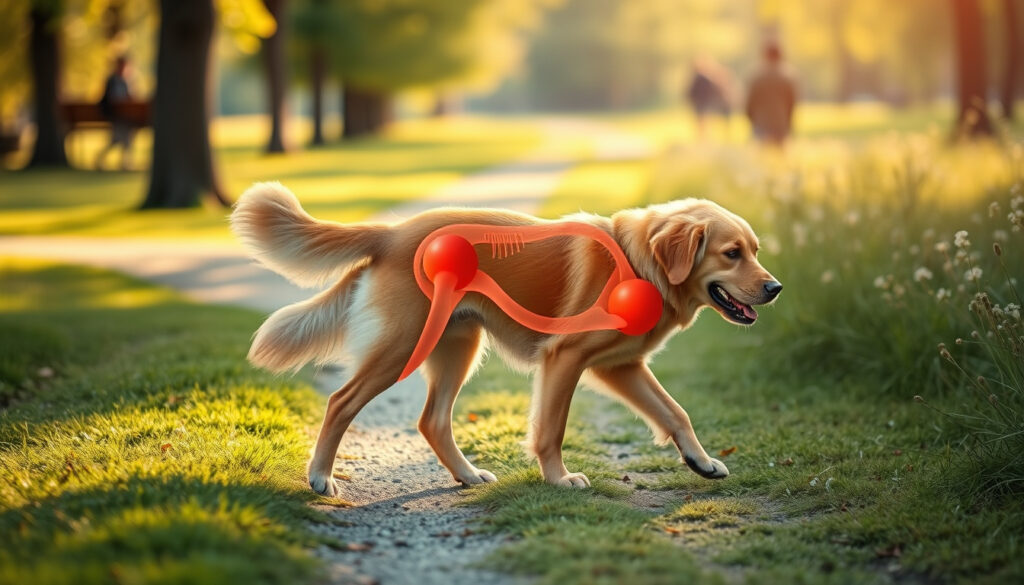
Hip Dysplasia in Dogs: Signs, Treatment, Prognosis
Hip dysplasia is far more common than most dog owners realize—and it’s the leading inherited orthopedic disease in large breeds, affecting roughly 1 in 6 dogs across all breeds. This guide covers what hip dysplasia looks like in its early stages, which breeds face the highest risk, and the treatment options available, drawing from veterinary studies and breed prevalence data.
Primary Cause: Genetic joint laxity · Common in: Large breeds · Key Complication: Osteoarthritis · Diagnosis Method: X-rays · Research Foundation: PMC, ACVS
Quick snapshot
- Genetic basis is the primary cause of hip dysplasia in dogs (American College of Veterinary Surgeons)
- Diagnosis relies on X-ray examination under sedation or anesthesia (Cornell University Veterinary)
- Conservative treatment controls signs, but arthritis typically worsens over time (Texas A&M Veterinary Hospital)
- Exact lifespan variance among treated dogs remains difficult to predict individually (American Kennel Club)
- Long-term efficacy data beyond 6 months for stem cell and regenerative therapies is limited (PMC peer-reviewed study)
- Standardized global prevalence data post-2020 has not been compiled (Institute of Canine Biology)
- UK hip score data shows decline in prevalence and severity from 1990 to present day (Frontiers in Veterinary Science)
- Swiss breed data shows Golden Retriever rates dropped from 25% (1991–1994) to 9% by 2019 (Frontiers in Veterinary Science)
- OFA statistics tracked through December 2016 remain the most comprehensive US breed database (Institute of Canine Biology)
- Early intervention before 8 months of age in large breeds yields the best surgical outcomes (Cornell University Veterinary)
- Hip replacement surgery provides pain-free function in 90–95% of cases (Morrison Animal Foundation)
- Breed-specific screening programs continue to reduce incidence in working lines (dvm360)
The following table summarizes the core facts about canine hip dysplasia that appear throughout this guide.
| Aspect | Details |
|---|---|
| Definition | Hip joint laxity and malformation during growth |
| Onset Age | Growth stage, often young dogs under 2 years |
| Genetic Factor | Inherited, multifactorial with genetics as primary driver |
| Complication | Secondary osteoarthritis (OA) develops in most cases |
| Overall Prevalence | 15.56% across breeds; 0% in Italian Greyhound to 77.7% in Bulldog (dvm360) |
| Status | Most common inherited disease in dogs per veterinary literature |
What are the first signs of hip dysplasia in a dog?
Early recognition of joint laxity is the key to preventing cartilage damage from progressing into severe arthritis, according to the American College of Veterinary Surgeons. The signs often emerge subtly during a dog’s growth phase, which is why owners of large-breed puppies should monitor closely.
Early indicators
- A loose or wobbly gait when walking, particularly noticeable on hard surfaces
- Difficulty rising from a lying position, especially after rest
- Reluctance to jump, climb stairs, or engage in prolonged exercise
- Bunny-hopping motion when running, where both back legs move together
Behavioral changes
Dogs in early stages often shift their weight forward to compensate for rear-leg discomfort. This compensation pattern can lead to noticeable muscle loss in the hindquarters over time. Pet owners may observe their dog sitting with one leg extended to the side rather than tucked underneath—a position that reduces pressure on the hip joint.
Limp progression
Lameness may appear in one rear leg initially before becoming bilateral. The limp often worsens after vigorous activity and improves with rest, though progressive joint damage means the good periods shorten over time without intervention. The American College of Veterinary Surgeons surgical guidelines confirm that symptoms include lameness, reluctance to rise or jump, and hip pain during examination.
The implication: owners who catch bunny-hopping or difficulty rising in large-breed puppies under 8 months should seek veterinary imaging immediately—corrective surgery is only possible before growth plates close.
How long can dogs live with hip dysplasia?
Hip dysplasia itself is not a death sentence for dogs. With appropriate management, many dogs lead full, active lives for years after diagnosis. The condition’s impact on lifespan depends heavily on how early the problem is identified and how aggressively it is managed.
Life expectancy factors
Several factors determine how hip dysplasia affects a dog’s longevity and quality of life: the dog’s age at diagnosis, the severity of joint laxity, how quickly arthritis develops, and the owner’s commitment to weight management and physical therapy. The American Kennel Club notes that the prognosis is good with treatment, and dogs can live long, full lives even with a CHD diagnosis.
Stage impacts
Dogs diagnosed in the mild-to-moderate stage often respond well to conservative management including weight control, joint supplements, and modified exercise. The Texas A&M Veterinary Hospital clarifies that conservative therapy controls clinical signs but arthritis worsens progressively without surgical correction. Severe cases with end-stage arthritis face more limited prognoses, particularly if both hips are affected.
Management outcomes
Studies tracking Golden Retrievers in Switzerland found that prevalence dropped from 25% in the early 1990s to 9% by 2019, attributed to widespread screening and selective breeding. This decline demonstrates that managed breeding programs directly improve the lifetime outcomes for subsequent generations of dogs.
The implication: dog owners who maintain ideal body weight, provide joint supplements, and commit to regular veterinary monitoring give their pets the best chance at a normal lifespan despite a CHD diagnosis.
Can dog hip dysplasia be fixed?
The honest answer is that hip dysplasia cannot always be fully reversed, but surgical options exist that restore near-normal function in most cases. The right approach depends on the dog’s age, size, and how far the condition has progressed.
Surgical options
Two surgical procedures offer the highest success rates for appropriate candidates. Triple Pelvic Osteotomy (TPO) achieves an 80–90% success rate for good function within 3 months in young dogs, as documented by the Morrison Animal Foundation. Total Hip Replacement (THR) yields 90–95% excellent function post-surgery and is considered the gold standard for large breeds with severe joint damage. The American College of Veterinary Surgeons notes that THR provides normal, pain-free function based on peer-reviewed outcomes.
Non-surgical management
Conservative treatment includes weight loss, joint supplements containing glucosamine and chondroitin, pain medications, exercise restriction, and physical therapy. Platelet-rich plasma combined with physical therapy improves limb function, while stem cell treatments with hyaluronic acid show improved range of motion—though adipose-derived stem cells prove more effective than plasma rich in growth factors for approximately 6 months, according to PMC research.
Juvenile corrections
For puppies diagnosed between 10 and 20 weeks of age, Juvenile Pubic Symphysiodesis (JPS) is an early intervention that prevents further cartilage damage by fusing part of the pelvis. The American College of Veterinary Surgeons recommends this procedure for the youngest patients, while Cornell Veterinary notes that TPO should be performed before 8 months in Labrador-sized dogs to be effective.
The implication: veterinarians who catch hip dysplasia before 8 months can offer juvenile correction surgeries that eliminate the condition entirely—waiting until the dog is older commits the owner to pain management for life.
Are dogs with hip dysplasia always in pain?
Pain levels in hip dysplasia vary considerably depending on the stage of the condition, the individual dog’s pain threshold, and whether secondary arthritis has developed. Not all dogs with hip dysplasia show obvious signs of pain, especially in early stages.
Pain variability
A young dog with hip laxity but no secondary arthritis may function relatively normally, compensating through gait changes that are subtle enough not to register as painful to casual observers. The condition becomes increasingly painful as the femoral head grinds against a poorly fitting acetabulum, wearing down cartilage and triggering inflammatory responses.
Mild vs. severe cases
Mild cases often respond well to conservative management without apparent pain. Severe cases, particularly those with advanced osteoarthritis, require ongoing pain management. The Morrison Animal Foundation notes that hip dysplasia leads to osteoarthritis, which directly impacts quality of life and creates both financial and emotional burden for owners.
Arthritis role
Secondary osteoarthritis is the primary driver of pain in mature dogs with CHD. As joint surfaces degrade, bone-on-bone contact produces chronic discomfort that worsens with activity. Joint supplements, anti-inflammatory medications, and weight management all contribute to reducing the arthritic component of pain, but complete resolution requires surgical correction of the mechanical problem.
Dogs are masters at hiding pain—a survival instinct from their pack-animal origins. A dog that seems “fine” may actually be compensating for significant discomfort. Subtle signs like reluctance to jump or slight muscle asymmetry warrant veterinary evaluation, even without obvious limping.
Which dog breed is most prone to hip dysplasia?
No single breed monopolizes hip dysplasia risk, but the condition clusters heavily among large and giant breeds, with Bulldogs showing the highest documented rates at 77.7%, according to dvm360 prevalence data.
High-risk large breeds
- Bulldog: 77.7% dysplasia rate—highest of any breed
- St. Bernard: 46.8% rate
- German Shepherd: Common in working lines with historically elevated rates
- Labrador Retriever: Among the most frequently affected large breeds
- Rottweiler: Significant prevalence reported in OFA data
- Golden Retriever: 25% in early 1990s Swiss studies, dropping to 9% by 2019
Genetic screening
The Orthopedic Foundation for Animals (OFA) maintains the most comprehensive US database tracking breed-specific hip scores. Cornell University Veterinary recommends that dogs with CHD should never be used for breeding—a policy supported by the multifactorial but genetically primary nature of the condition. Selective breeding against affected animals has produced measurable results: Swiss Golden Retriever rates fell from 25% to 9% over three decades.
Breed prevalence
The Italian Greyhound shows 0% prevalence, demonstrating that small companion breeds are essentially exempt from the condition. English Bulldogs, Pugs, and Bordeaux Dogs all exceed 50% dysplasia rates, making them the breeds most likely to present with hip problems at any veterinary clinic. AKC working dog groups and FCI pinscher, schnauzer, Swiss mountain, and molossoid breeds show elevated risk, per dvm360 demographic analysis.
The implication: breed-specific screening programs work—breeders who test and remove affected dogs from their programs have driven the Golden Retriever rate down from 25% to 9% in Switzerland over 30 years.
Breed prevalence data tells prospective owners which dogs require extra vigilance. A German Shepherd or Labrador puppy should receive hip evaluations before 8 months if early surgical correction is on the table—something that is no longer possible once the growth plates close.
Confirmed facts
- Genetic basis established through breeding studies
- X-ray is the standard diagnostic method
- Hereditary factors are the biggest risk factor
- THR achieves 90–95% excellent function
- TPO has 80–90% success rate in young dogs
- Arthritis worsens without intervention
What’s unclear
- Exact individual lifespan variance
- Long-term stem cell efficacy beyond 6 months
- Post-2020 standardized global prevalence data
- Optimal home treatment protocols
- Precise environmental co-factor contributions
Hip dysplasia is a common developmental problem in large and giant breed dogs and, by some estimates, is the most common inherited disease seen in dogs.
— Morrison Animal Foundation (Research foundation)
Early recognition of joint laxity is the key to preventing cartilage damage from progressive joint laxity.
— American College of Veterinary Surgeons (Board-certified surgeon guidelines)
The results show a general decline in hip score parameters, revealing a reduction in the prevalence and severity of hip dysplasia.
— Frontiers in Veterinary Science (Peer-reviewed journal)
The downward trend in breed-specific hip scores across multiple countries suggests that coordinated screening and breeding programs are working. For current dog owners, this means that puppies from responsibly bred lines face meaningfully lower risk than their parents’ generation—but vigilance remains essential because environmental factors like rapid weight gain can amplify genetic predisposition.
For owners of at-risk breeds, the practical implication is clear: schedule a veterinary hip evaluation before your dog reaches 8 months of age, maintain ideal body weight throughout life, and consider joint supplement supplementation for large-breed dogs even before symptoms appear. Dogs already showing signs of discomfort have a range of options from conservative management to hip replacement—but the earlier the intervention, the better the outcome.
What causes hip dysplasia in dogs?
Hip dysplasia results from genetic predisposition combined with environmental factors. The primary cause is inherited joint laxity that allows the femoral head to fit poorly in the acetabulum, leading to abnormal wear and eventual osteoarthritis. Rapid weight gain during growth can exacerbate the condition, but genetics account for the vast majority of risk.
How is hip dysplasia diagnosed in dogs?
Diagnosis requires physical examination and X-ray imaging. Veterinarians typically sedate or anesthetize dogs to position them properly for hip radiographs that reveal joint laxity, subluxation, and secondary arthritic changes. PennHIP and OFA scoring systems provide standardized assessment methodologies used by breeding programs and veterinary specialists.
What are stages of hip dysplasia in dogs?
Hip dysplasia is not formally staged in a universal grading system, but veterinarians assess severity using radiograph-based scoring. The OFA grades hips from Excellent (normal) to Severe (dysplastic), while PennHIP measures laxity numerically. Mild cases show minimal radiographic changes; moderate cases display subluxation and early arthritis; severe cases present with marked joint deformity and advanced osteoarthritis.
Is hip dysplasia in dogs fatal?
Hip dysplasia itself is not fatal. Dogs can live full lives with proper management. However, severe untreated cases leading to end-stage arthritis and chronic pain may result in euthanasia decisions based on quality of life. Early intervention and appropriate treatment dramatically improve long-term outcomes and survival rates.
What is dog hip dysplasia home treatment?
Home-based management includes maintaining ideal body weight, providing joint supplements containing glucosamine and chondroitin, restricting high-impact exercise, and adapting the home environment with ramps or orthopedic bedding. Physical therapy exercises prescribed by a veterinarian can improve muscle mass and joint function. Pain management medications require veterinary supervision.
Related reading: diagnosis and treatment of developmental disorders
More related posts
 A.J. Cook Biography: Career, Family, and Current Projects
 Empower Field at Mile High: History, Facts & Future Plans
 Majestic Elegance Costa Mujeres: Guide vs Cancun
 Matthew Rhys Movies and TV Shows: Full Career Guide
 Who’s Playing Football Today? Today’s Matches & How to Watch
 Best Shows on Apple TV (2026): Top 10 Critically Acclaimed Series
 Jersey Mike’s Near Me – Find Locations, Hours & Menu Guide
