How Long Does a Period Last? Normal Length, Cycles, and Signs
The definition of a normal period shifts constantly across life stages, but clinical guidelines from the Mayo Clinic, Cleveland Clinic, and the NHS provide clear reference points for what to expect. This guide breaks down exactly how long periods last, what changes at each stage, and when to see a doctor.
Normal period length: 2 to 7 days ·
Average period length: 5 days ·
Normal menstrual cycle: 24 to 38 days ·
Heaviest flow days: First 2 days ·
Average age for first period: 12 years old
Quick snapshot
- Periods last 2–7 days in 90% of cycles (Mayo Clinic)
- Menstrual cycle ranges 24–38 days (Cleveland Clinic)
- Menopause is 12 months of no periods (Cleveland Clinic)
- Why individual period lengths vary month to month
- When exactly the “final period” will come in perimenopause
- How quickly periods become regular after menarche
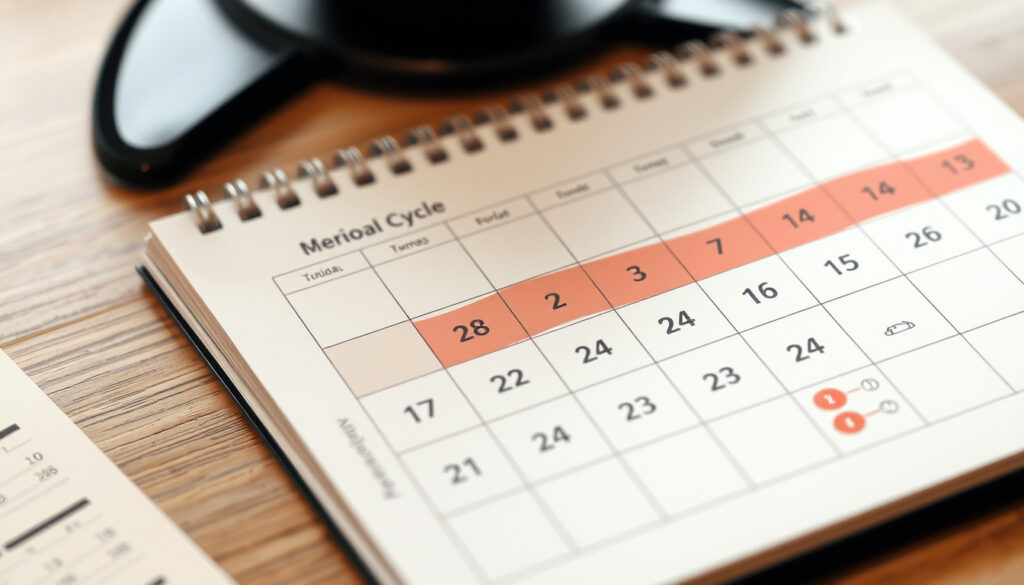
- Day 1: menstruation begins (Cleveland Clinic)
- Days 1–5: menstrual phase, heaviest on days 1–2 (Mayo Clinic)
- Day 14: ovulation (shifts with cycle length) (Cleveland Clinic)
- If cycles shift by 7+ days, check for perimenopause (Mayo Clinic)
- 60+ days between periods = late perimenopause signal (Mayo Clinic)
- Consult a doctor if bleeding lasts >7 days (Mayo Clinic)
Six key facts, one pattern: the definition of a “normal” period depends heavily on where you are in your life, but clinical guidelines give clear reference points.
| Fact | Value | Source |
|---|---|---|
| Normal period length | 2 to 7 days | Mayo Clinic |
| Average period | ~5 days | NHS |
| Total cycle length | 24 to 38 days | Cleveland Clinic |
| Heaviest flow days | Day 1 and 2 | Mayo Clinic |
| Average age at first period | 12 years old | Mayo Clinic |
| Menopause definition | 12 months with no period | Cleveland Clinic |
For most women, a period lasting 2–7 days with a cycle of 24–38 days is clinically normal. The catch? Adolescence and perimenopause routinely break these rules—and that’s usually okay. But when the rules break too far, it’s a sign to check in with a doctor.
How many days does a normal period last?
What is the average period length?
- Normal menstrual bleeding lasts 2 to 7 days, according to the Mayo Clinic (health authority).
- The average period lasts about 5 days, as noted by the NHS 111 Wales (national health service).
- The Cleveland Clinic (specialist medical center) confirms that menstrual flow may last two to seven days each month.
- A review indexed in PubMed Central (peer-reviewed medical database) reports that normally ovulatory menstrual cycles occur at a regular interval of 21 to 35 days in reproductive-aged women.
What is the 7-2-1 rule for menstruation?
- The 7-2-1 rule describes: 7 days max length, 2 days heavy, 1 day of spotting.
- While not a formal clinical guideline, it’s a useful shorthand drawn from the Mayo Clinic 2–7 day window and the typical pattern of heaviest flow on days 1–2.
What is normal period flow?
- Total menstrual blood loss typically ranges from 30 to 80 mL, though most people don’t measure it.
- Flow is heaviest on day 1 and day 2, then gradually tapers (Mayo Clinic).
- Small changes in period length from month to month are normal, but “big changes should be checked by a clinician,” says Cleveland Clinic.
What this means: The 2–7 day window is a clinical standard, not a suggestion. If your period checks these boxes, your cycle is likely doing what it should.
How long does a first period last?
How long does a period last for a 12 year old?
- First periods often last 2 to 7 days, but cycles can be irregular for the first few years (NHS 111 Wales).
- The average age for menarche is 12 years old, according to the Mayo Clinic.
- It’s normal for a first period to be light and short—the body needs time to establish a regular pattern.
When do periods usually start in the month?
- Teen cycles can range from 21 to 45 days (Mayo Clinic).
- Long cycles are common for the first few years after menstruation begins, as the hypothalamic-pituitary-ovarian axis matures.
- The first period might not last very long because it can take months for a regular pattern to develop (NHS 111 Wales).
What is a normal cycle for teens?
- A normal teen cycle can be 21 to 45 days, which is broader than the adult range of 24 to 38 days.
- Irregular cycles are the norm for the first 2–3 years after menarche, not a sign of a problem.
- A review in PubMed Central notes that cycle length stabilizes as the body matures.
A 12-year-old who has a 3-day period one month and a 6-day period the next is normal. The worry threshold is different for teens: bleeding that lasts longer than 7 days or cycles that consistently exceed 45 days should be discussed with a pediatrician or adolescent gynecologist.
The implication: If you’re a parent or a teen dealing with a first period, patience is key. Irregularity is expected, and the body will naturally settle into a rhythm—usually within a couple of years.
How do I know my period has ended?
What is considered the last day of a period?
- A period is considered over when bleeding stops completely for 24 hours (Cleveland Clinic).
- Checking the color and flow consistency can indicate the phase of the period—fresh red blood signals active flow, while darker blood suggests the end.
What does brown blood or spotting mean?
- The last day often involves light spotting or brown discharge, which is older blood being expelled.
- This is normal and does not count as active menstrual bleeding.
- If you see brown spotting before a period starts or after it ends, it’s typically the remnants of the previous cycle.
Follow these steps to confirm your period has ended:
- Track the first day of bright red bleeding as Day 1 of your cycle.
- Note the heaviness of flow over the following days.
- Watch for the transition from bright red to dark brown spotting.
- Confirm 24 consecutive hours have passed with zero bleeding.
The pattern: Your period is truly over when you have 24 hours of no bleeding. Brown discharge or light spotting does not reset the clock—it’s just the cleanup crew.
What is an unhealthy period length?
Is it normal for a period to last 10 days?
- Bleeding for more than 7 days is considered menorrhagia (abnormal uterine bleeding), per the Mayo Clinic.
- Prolonged bleeding can be a sign of hormonal imbalance, fibroids, polyps, or other underlying conditions.
- Consult a healthcare provider if bleeding lasts more than 7 days or is very heavy (Cleveland Clinic).
I have an 11-day period. Should I be worried?
- An 11-day period exceeds the 7-day threshold and warrants a medical evaluation.
- Bleeding between periods is also a sign to seek care (Mayo Clinic).
- Around 20% of women experience menorrhagia at some point, with causes ranging from thyroid issues to uterine abnormalities.
If your period lasts more than 7 days, or if you’re soaking through a pad or tampon every hour for several hours in a row, you may have abnormal uterine bleeding. The Cleveland Clinic recommends checking in with a clinician rather than waiting to see if it resolves on its own.
The trade-off: What’s “normal” for you may differ from the textbook 5-day average, but the 7-day ceiling is a well-established clinical red line. Crossing it means it’s time to investigate, not to wait.
How do I make my period end faster?
Can I stop my period for a day?
- Hormonal birth control (pill, ring, IUD) is a common medical way to shorten or stop periods (Mayo Clinic).
- OTC medications like ibuprofen can reduce flow by up to 20-30% but cannot abruptly stop a period already in progress.
- Natural methods (exercise, diet) have limited evidence for shortening a period once it has started.
Is it safe to shorten my period with birth control?
- Yes, when prescribed by a doctor. Combined oral contraceptives, the hormonal IUD, and the contraceptive ring can all reduce or eliminate periods.
- A hysterectomy or endometrial ablation is a permanent surgical option for those who do not want future pregnancies.
- The Cleveland Clinic advises that you should not try to stop a period on your own without medical guidance.
The catch: You can’t “end” a period that’s already started with a home remedy. The only reliable way to shorten or skip periods is through hormonal manipulation under medical supervision—or by treating the underlying cause if your period is abnormally long.
What does a final period feel like?
What are the signs perimenopause is ending?
- Perimenopause lasts 4 to 8 years on average, according to the Mayo Clinic, but can range from a year to over a decade.
- A final period is often lighter or heavier than normal, and cycles become very irregular.
- Early perimenopause typically begins when cycle length varies by around seven days or more (Clue (menstrual health platform)).
Can I have a period after 12 months of no bleeding?
- Menopause is confirmed after 12 consecutive months without a period (Mayo Clinic).
- Cleveland Clinic says you should assume you are still ovulating until you have not menstruated for 12 consecutive months (Cleveland Clinic (gynecology resource)).
- Going 60 days or more between periods suggests late perimenopause (Mayo Clinic).
- Common symptoms include hot flashes, sleep disturbances, and mood changes alongside cycle changes.
For a woman in her late 40s, a period that’s suddenly heavier or longer than usual could be a sign perimenopause is beginning—not ending. The Midi Health (perimenopause specialty clinic) notes that average bleeding can range from 4 to 8 days during this transition, and short cycles under 21 days are also common in early perimenopause.
Why this matters: The final period is often a trickster—it may be lighter, heavier, shorter, or longer than previous ones. The only way to know it was truly the last one is to wait 12 months. Until then, consider yourself potentially fertile and keep tracking.
Menstrual cycle timeline
- Day 1: First day of period, menstruation begins (Cleveland Clinic).
- Days 1–5: Menstrual phase. Uterine lining sheds. Heaviest flow typically on days 1–2 (Mayo Clinic).
- Days 1–13: Follicular phase. Pituitary gland releases FSH, stimulating egg maturation in the ovary (Cleveland Clinic).
- Day 14: Ovulation. A mature egg is released from the ovary. Cycle length varies, so this day shifts (Cleveland Clinic).
- Days 15–28: Luteal phase. Progesterone rises to prepare the uterine lining. If no pregnancy, progesterone drops, triggering menstruation (Mayo Clinic).
Confirmed facts vs. what’s unclear
Confirmed facts
- Periods last 2–7 days in 90% of cycles (Mayo Clinic).
- First periods typically begin between ages 10 and 15 (Mayo Clinic).
- Menopause is clinically defined as 12 months of amenorrhea (Mayo Clinic).
What’s unclear
- Why individual period lengths vary so much from month to month.
- The exact predictability of the “final period” in perimenopause.
- How quickly a period will become regular after menarche.
- The exact menstrual cycle range across all age groups and sources (21–35 vs 24–38 days).
Expert perspectives on period length
“A normal menstrual cycle can last between 21 and 35 days.”
— Cleveland Clinic gynecologist
“Menstrual bleeding might happen every 24 to 38 days and last up to 8 days.”
— Mayo Clinic staff
“Your period can last between 2 and 7 days, but it will usually last for about 5 days.”
“The average menstrual cycle length across the adult population is 28.7 days.”
What this means for you
For the average woman, a period lasting 2–7 days with a cycle of 24–38 days is clinically normal. But the real picture is more nuanced: adolescents routinely have irregular cycles, perimenopausal women see wild variability, and anyone bleeding longer than 7 days should see a doctor. The decision is clear: track your cycle, know the 7-day red line, and treat changes in pattern as useful signals—not reasons to worry. For the woman in perimenopause, the implication is stark: until you’ve gone 12 months without a period, you are not yet in menopause, and a sudden return of bleeding after months of nothing warrants a medical check, not a celebration.
flo.health, drlauriealpertnd.com, health.yahoo.com, clearblue.com, hercycle.health
Frequently asked questions
Can stress delay my period?
Yes. Stress triggers cortisol release, which can suppress the hypothalamic-pituitary-ovarian axis and delay ovulation—and therefore your period. Short-term stress may cause a few days’ delay, while chronic stress can lead to missed months.
What is PMS?
Premenstrual syndrome (PMS) includes emotional and physical symptoms—bloating, mood swings, fatigue, breast tenderness—that typically start after ovulation and resolve once your period begins. Symptoms range from mild to severe; PMDD is a more intense form.
Why is my period blood black?
Black period blood is usually old blood that has taken longer to exit the body. It’s common at the start or end of a period, and not typically a cause for concern. The oxidation process turns red blood progressively darker—from dark red to brown to black.
Does the color of period blood mean anything?
Yes, to some extent. Bright red blood signals fresh flow (usually days 1–2). Darker red, brown, or black blood means older blood. Pink or gray discharge could indicate low estrogen or an infection; if gray occurs with odor or pain, see a doctor.
Can I get pregnant right after my period?
Yes. If you have a short cycle (e.g., 21 days), ovulation can happen as early as day 7—just days after your period ends. Sperm can survive up to 5 days, so unprotected sex during the last days of your period could lead to pregnancy.
How does exercise affect my period?
Moderate exercise can help regulate cycles and reduce menstrual pain. Intensive training (e.g., marathon running, competitive sports) may suppress ovulation, leading to lighter or missed periods. This is called hypothalamic amenorrhea and is reversible with reduced training intensity and increased caloric intake.
More related posts
 Sweet and Sour Sauce Recipe: The Secret to Balanced Flavor
 Chip Industry Updates Today: Semiconductor News & Stocks
 PGA Leaderboard Today Payout: Live Scores & Prize Money
 How to Screen Record on Mac: Complete Guide (2025)
 MGM Music Hall at Fenway: Seats, Capacity, and Guide
 Small Wardrobe Organization: 50% Rule & 3-3-3 Method
 Ear Wax Removal Kit – Top Doctor-Recommended Picks
 Closest Beach to Me in Ireland: Find Your Nearest Beach by Car
